About 177 minutes
In Story-land — Story, Setting & Ideas
Childrens Adventures
40,552 recorded words. 2 minutes difference from this book's estimate.
View Gutenberg source #33980
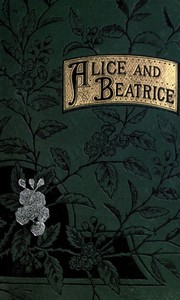
Before opening Alice and Beatrice — Text and Context, the edition data offers a quick orientation: 40,065 words, 2 hr 55 min estimated reading time, and 22 detected text sections.
The text analysis averages about 16.0 words per sentence, while the detected sections provide another way to judge how the source is divided.
Project Gutenberg metadata also associates the work with “Children's stories,” connecting these edition facts with the source record’s subject description.
Explore this collection
These alternatives are selected using recorded categories and estimated reading time.
About 177 minutes
Childrens Adventures
40,552 recorded words. 2 minutes difference from this book's estimate.
View Gutenberg source #33980About 171 minutes
Childrens Adventures
39,244 recorded words. 4 minutes difference from this book's estimate.
View Gutenberg source #39757About 182 minutes
Childrens Adventures
41,759 recorded words. 7 minutes difference from this book's estimate.
View Gutenberg source #33544Search stored excerpts and compare books → Choose by your preferences →
Choices use stored catalog measurements. Estimates vary with reading speed. A shared category is a catalog label, not a claim that two books have the same argument or literary quality.
Search reads excerpt text stored with this catalog and links to its associated Gutenberg record. The connection is stored in the site database; this tool does not recheck that every excerpt is word-for-word identical to that external record. Excerpt search does not cover every chapter and does not verify historical publication dates.
Catalog snapshot checked: 2026-09-25. Coverage: 100 public books, 100 available source excerpts.
Read the complete public-domain text at its original source.
Read on Project GutenbergThe narrative voice in Alice and Beatrice is consistently that of a patient, affectionate grandmother speaking directly to her young audience. The opening chapter establishes a slow, rhythmic pace: morning prayers, breakfast, lessons, and a walk to the sea are described in short, simple sentences that mirror a child’s daily routine. The narrator frequently addresses the reader with phrases like “you know” and “my child,” creating an intimate, tutorial tone. Yet this steady tempo is punctuated by episodes of sudden activity—such as the purchase of a parrot from a shipwrecked sailor—where the prose quickens, dialogue becomes more frequent, and sensory details (the parrot’s small cage, the sailor’s rope descent) sharpen the scene.
The grandmother-narrator rarely lets a moment pass without drawing a moral or a fact. When Alice asks where parrots come from, the reply is a mini geography lesson: “Europe, Asia, Africa, America, and Australia.” The narrator also inserts gentle corrections: “though it is cruel and wrong to shut birds up in cages,” she says, before explaining how to make the pets comfortable. This dual purpose—entertaining while instructing—shapes every chapter. The language is plain, with few adjectives, but the repetition of key phrases (“good and happy,” “bless and take care”) reinforces the book’s ethical framework. The voice never wavers into irony or adult condescension; it remains earnestly focused on the children’s understanding.
The book’s structure alternates between slow, domestic scenes and sudden, eventful episodes. Chapter I moves at a leisurely walk: prayers, breakfast, verandah play, lessons. Then, in Chapter XIII, the pace accelerates dramatically with a shipwreck and the purchase of a parrot. The sailor “disappeared among the crowd” and “let himself down to the ground by a rope”; the children “could scarcely express their joy.” The sentences grow shorter, the actions more urgent. Later, the pace slows again as grandmamma shows Alice how to strew sand in the cage and where to place seed. These contrasts keep young readers engaged: the calm of daily life makes the bursts of excitement more vivid, and the return to routine provides a comforting resolution.
Certain small details recur, grounding the story in a tangible world. The verandah appears in the first chapter as a place for running; the sea is a constant presence, whether for bathing, walks, or as the backdrop for the shipwreck. The grandmother’s method of teaching—having Alice recite verses, do sums, write copies—is described with the same specificity as the parrot’s cage: “a large wooden ring” for swinging, “sand on the board at the bottom.” These repeated, concrete images create a coherent setting. Even the moral lessons are tied to physical objects: the parrot’s rescue leads to a discussion of God’s care, linking the tangible bird to an abstract idea. The narrative never loses sight of the children’s limited perspective, always returning to what they can see and touch.
Readers will notice that the grandmother’s voice, though consistently gentle, adapts its pace to the material: slow for instruction, brisk for adventure. Pay attention to how the narrator uses questions (“But where is their country?”) to let the children guide the conversation, and how the moral reflections never feel forced because they emerge from concrete events. This is a book that trusts its young audience to follow both a story and a lesson, as long as the telling stays clear and warm.
That rainy afternoon, tracing how Grandmamma’s calm lessons gave way to the children’s frantic bird rescue, I felt the same warm rhythm of interruption and return. Later, drying my hands on my trousers, I found myself pulling down Neighbor Nelly Socks Being the Sixth and Last Book of the Series — Story, Setting & Ideas from a dusty shelf, its quiet ordinariness somehow holding the same gentle pulse, as if the weather outside had chosen its own next chapter. Neighbor Nelly Socks Being the Sixth and Last Book of the Series — Story, Setting & Ideas
Save your reaction, strongest insight, and memorable passage.









