About 55 minutes
Ginevra — Context and Discussion
Childrens Adventures
12,481 recorded words. 7 minutes difference from this book's estimate.
View Gutenberg source #72586
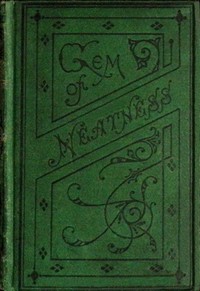
Gem of neatness — Background and Themes can be approached with a clearer sense of reading commitment from its source measurements: 14,156 words, 1 hr 2 min estimated reading time, and 2 detected text sections.
The text analysis averages about 15.7 words per sentence, while the detected sections provide another way to judge how the source is divided.
Project Gutenberg metadata also associates the work with “Christian life -- Juvenile fiction,” connecting these edition facts with the source record’s subject description.
Explore this collection
These alternatives are selected using recorded categories and estimated reading time.
About 55 minutes
Childrens Adventures
12,481 recorded words. 7 minutes difference from this book's estimate.
View Gutenberg source #72586About 53 minutes
Childrens Adventures
12,123 recorded words. 9 minutes difference from this book's estimate.
View Gutenberg source #54477About 75 minutes
Childrens Adventures
17,156 recorded words. 13 minutes difference from this book's estimate.
View Gutenberg source #29595Search stored excerpts and compare books → Choose by your preferences →
Choices use stored catalog measurements. Estimates vary with reading speed. A shared category is a catalog label, not a claim that two books have the same argument or literary quality.
Search reads excerpt text stored with this catalog and links to its associated Gutenberg record. The connection is stored in the site database; this tool does not recheck that every excerpt is word-for-word identical to that external record. Excerpt search does not cover every chapter and does not verify historical publication dates.
Catalog snapshot checked: 2026-09-25. Coverage: 100 public books, 100 available source excerpts.
Read the complete public-domain text at its original source.
Read on Project GutenbergFrom its opening scene, Gem of Neatness establishes order as a visible, almost tactile quality. Mrs. Morgan calls Cousin Mary to admire Emily’s chamber, where “everything has a place, and is in its place.” The description lingers on the even row of books, the absence of dust, and a single carnation-pink in a tiny vase—details that make neatness a character trait rather than a chore. Cousin Mary’s exclamation that Emily is “a jewel of a girl” ties the virtue directly to the girl’s identity. Yet the narrative soon shifts from this still-life praise to a far more urgent register: the embedded story of Iwassee, a Native American woman whose conversion to Christianity is inseparable from her adoption of cleanliness. The pace changes markedly, from measured domestic observation to a rapid, almost breathless account of filth, vermin, and transformation.
The first chapter moves slowly, dwelling on surfaces. Emily’s room is presented as a finished tableau: the book-rack, the vase, the speckless volumes. The narrative voice is approving, almost reverent, and the dialogue between Mrs. Morgan and Cousin Mary reinforces a shared admiration. This static quality mirrors the moral certainty of the lesson—neatness is already achieved, already perfect. The prose itself becomes orderly, with short, declarative sentences and a rhythm that mimics the very arrangement it describes. There is no conflict, no mess, no interruption. The reader is invited to gaze, not to question. This opening functions as a kind of before-and-after in reverse: we see the ideal before we encounter its opposite.
In stark contrast, the account of Iwassee and the missionaries introduces a different tempo and vocabulary. Words like “filthy,” “vermin,” “pollution,” and “unwashed” recur, creating a sensory shock after the pristine bedroom. The narrative becomes a series of vivid, almost ethnographic details: arrows hung on pegs, unwashed kettles, lounging on grass. The pace accelerates as the missionary’s wife reads Bible verses directly: “Wo to her that is filthy!” The voice shifts from descriptive to hortatory, and the sentences grow longer, more urgent. Iwassee’s conversion is described in emotional terms—“tears of joy ran down her swarthy cheeks”—and the transformation is swift: she bathes, tidies herself, and is “scarcely known.” The change in pace mirrors the change in the character, from static degradation to dynamic reform.
The alternation between slow, orderly description and rapid, urgent narration is itself a rhetorical device. The calm opening establishes a norm; the missionary story provides its opposite, then shows a resolution that returns to order—but now as a hard-won achievement. The final paragraphs of the excerpt describe the visible results: log huts, gardens, bright blossoms. The pace slows again, but the stillness now feels earned. The narrator’s voice becomes reflective, noting that a stranger could tell a Christian’s tent “for himself.” This structural rhythm—stillness, disruption, recovery—mirrors the book’s didactic arc. Leslie uses pace not merely for variety but to embody the moral transformation she advocates: from complacent order through chaotic disorder to a purified, conscious neatness.
Readers attentive to shifts in tempo will notice how Leslie calibrates her prose to reinforce her lesson. The calm, admiring tone of the domestic scenes gives way to a more insistent, almost feverish voice in the missionary narrative, then settles into a quieter but more deliberate register. This pattern suggests that true neatness, for Leslie, is not a static condition but a process—one that requires disruption, effort, and spiritual awakening. The excerpts do not reveal how the cousins’ story resolves, but the narrative’s own rhythm offers a clue: order, once tested, may emerge stronger.
Sometimes a book’s tidiness speaks of more than shelves. That editorial on Gem of Neatness reminded me how cleanliness whispers of order within. I found that same quiet longing in Funny Little Socks Being the Fourth Book — A Closer Reading, where small garments hold a household’s hopes. They sit together on my shelf, two gentle mirrors of domestic grace.
Answer a few questions and save a private reflection on this device.









