About 202 minutes
Nellie's Housekeeping Little Sunbeams Series — Reading Notes
Childrens Adventures
46,371 recorded words. 1 minutes difference from this book's estimate.
View Gutenberg source #45751
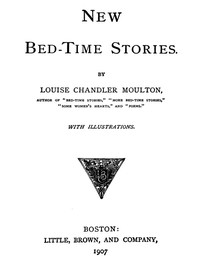
This digital edition of New Bed-Time Stories — Story, Setting & Ideas is described by source-level measurements including 46,187 words, 3 hr 21 min estimated reading time, and 15 detected text sections.
The text analysis averages about 18.3 words per sentence, while the detected sections provide another way to judge how the source is divided.
Project Gutenberg metadata also associates the work with “Conduct of life -- Juvenile fiction,” connecting these edition facts with the source record’s subject description.
Explore this collection
These alternatives are selected using recorded categories and estimated reading time.
About 202 minutes
Childrens Adventures
46,371 recorded words. 1 minutes difference from this book's estimate.
View Gutenberg source #45751About 215 minutes
Childrens Adventures
49,272 recorded words. 14 minutes difference from this book's estimate.
View Gutenberg source #23501About 186 minutes
Childrens Adventures
42,699 recorded words. 15 minutes difference from this book's estimate.
View Gutenberg source #54803Search stored excerpts and compare books → Choose by your preferences →
Choices use stored catalog measurements. Estimates vary with reading speed. A shared category is a catalog label, not a claim that two books have the same argument or literary quality.
Search reads excerpt text stored with this catalog and links to its associated Gutenberg record. The connection is stored in the site database; this tool does not recheck that every excerpt is word-for-word identical to that external record. Excerpt search does not cover every chapter and does not verify historical publication dates.
Catalog snapshot checked: 2026-09-25. Coverage: 100 public books, 100 available source excerpts.
Read the complete public-domain text at its original source.
Read on Project GutenbergThe opening story, “All a-Growin’ and a-Blowin’,” immediately establishes a distinctive narrative voice: the third-person narrator lingers on Miss Endell’s weary search for lodgings in London, describing the “gray March weather” and the “gloom of coming dusk.” The prose moves at a deliberate, almost novelistic pace, with careful attention to setting and character interiority. This measured opening contrasts sharply with later stories, such as the Fourth of July episode, where the narrative accelerates into brisk action—boys marching, a pistol displayed, and Conn’s impulsive journey into Boston. The collection thus offers a varied tempo, from reflective domestic scenes to lively adventure.
Moulton frequently breaks the fourth wall, speaking directly to her young audience. In the dedicatory poem, she writes, “You’ll read these tales of mine;— / I see, above my story-book, / Your happy brown eyes shine.” This direct address recurs in the prose: the narrator comments on characters’ feelings or actions, as when Conn’s desire to look nice for Jack’s pistol is deemed “extremely natural.” The effect is a conversational, almost intimate tone that guides the reader’s interpretation. The narrator also uses rhetorical questions and asides, such as “who cares to work on holidays?” to align with the child’s perspective. This technique creates a sense of shared understanding between storyteller and listener, reinforcing the moral lessons without heavy-handedness.
The collection’s pacing is notably uneven, shifting between static, descriptive passages and rapid sequences of events. In “All a-Growin’ and a-Blowin’,” the narrative dwells on Miss Endell’s lodging search—the “weary work of which Dante speaks”—before suddenly moving to her arrival and the household’s dynamics. Similarly, the Fourth of July story begins with Conn sewing and reading, then accelerates as she decides to follow the boys: “She called her Aunt Sarah’s one servant, and made her promise to keep the secret.” The contrast between quiet interiority and impulsive action creates a rhythm that mirrors a child’s attention span. Moulton often uses short, punchy sentences to mark transitions: “Then came breakfast, and then the marching of the Brighton Blues.”
Certain concrete details recur across stories, lending cohesion to the collection. The motif of ribbon appears both as a decorative item and a bribe—Conn uses a “bit of blue ribbon” to persuade a servant. Roses also reappear: Conn gathers “a bunch of late red roses” and puts them in her bosom. These small, sensory objects ground the narratives in a tangible world. Additionally, the setting often includes specific urban locations—Guilford Street in London, Boston streets on the Fourth of July—that give the stories a geographic specificity. The narrator’s attention to these details, from the “drawing-room floor” of a lodging house to the “blue uniforms” of the marching boys, builds a consistent, believable environment for the moral lessons to unfold.
Readers may find it useful to note how Moulton’s narrative voice and pacing shift from story to story. Some tales open with leisurely description, while others plunge directly into dialogue or action. Pay attention to the moments when the narrator steps in to comment—these often signal the moral or emotional core of the piece. The collection rewards a reading that savors both the quiet domestic details and the sudden bursts of childhood adventure.
In Mrs. Moulton’s gentle bedtime world, each little tale closes like a softly latched door, a child’s worry soothed by some quiet turn of fortune. I often think of that same tender hush when I reach for Patrañas; or, Spanish Stories, Legendary and Traditional — Key Ideas to Explore, where old legends murmur their lessons from a distant, sunlit hearth. Both feel like worn hands, folded at day’s end.
Answer a few questions and save a private reflection on this device.









