About 104 minutes
Andiron Tales — Edition Insights
Childrens Adventures
23,813 recorded words. 1 minutes difference from this book's estimate.
View Gutenberg source #24130
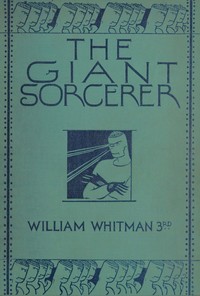
Before opening The Giant Sorcerer — Story, Setting & Ideas, the edition data offers a quick orientation: 24,150 words, 1 hr 45 min estimated reading time, and 20 detected text sections.
The text analysis averages about 12.3 words per sentence, while the detected sections provide another way to judge how the source is divided.
Project Gutenberg metadata also associates the work with “Fantasy fiction,” connecting these edition facts with the source record’s subject description.
Explore this collection
These alternatives are selected using recorded categories and estimated reading time.
About 104 minutes
Childrens Adventures
23,813 recorded words. 1 minutes difference from this book's estimate.
View Gutenberg source #24130About 106 minutes
Childrens Adventures
24,294 recorded words. 1 minutes difference from this book's estimate.
View Gutenberg source #68158About 107 minutes
Childrens Adventures
24,505 recorded words. 2 minutes difference from this book's estimate.
View Gutenberg source #48747Search stored excerpts and compare books → Choose by your preferences →
Choices use stored catalog measurements. Estimates vary with reading speed. A shared category is a catalog label, not a claim that two books have the same argument or literary quality.
Search reads excerpt text stored with this catalog and links to its associated Gutenberg record. The connection is stored in the site database; this tool does not recheck that every excerpt is word-for-word identical to that external record. Excerpt search does not cover every chapter and does not verify historical publication dates.
Catalog snapshot checked: 2026-09-25. Coverage: 100 public books, 100 available source excerpts.
Read the complete public-domain text at its original source.
Read on Project GutenbergThe story opens with Raphael and Cassandra in a white house tucked behind five elm trees, a setting that immediately establishes a sheltered rural life. Raphael’s nightly wonder about what lies beyond the wooded hill—great cities, seas, mountains—foreshadows the journey to come. The narrative voice shifts between the domestic (a dog named Habakkuk needing a bath) and the fantastical (tigers and giraffes on the wallpaper). This contrast between the familiar and the strange is a key pattern throughout the book.
The opening chapter grounds the story in a specific, tactile landscape: a white barn with a green door, an orchard enclosed by a gray stone wall, and a railroad crossing a mile away. Raphael’s thoughts drift from building a robin’s house to the roar of trains, which he loves for their speed and power. The prose lingers on sensory details—moonlight on the windowsill, the white outline of Cassandra’s bed—before veering into Raphael’s rebellion against Aunt Mary’s rules. This tension between the cozy and the adventurous is not merely background; it shapes the siblings’ motivations. When Raphael later encounters the mechanical city of Mechana, he thinks, “Why, this is just like Uniontown,” suggesting that the fantastical world mirrors his own. The author uses the farm as a touchstone, a point of comparison for the bizarre landscapes to come.
When Raphael enters Mechana, the description becomes deliberately industrial: macadam roads, billboards advertising “Mozzo Oil” and “U-Kant-Beat-It,” and skyscrapers casting shadows. The mechanical men—with gray faces, glassy eyes, and rope hair—are described with clinical precision. Their lack of ears and their metal shoes emphasize their inhumanity. Yet the city also feels familiar: billboards, traffic, and a president. The Sorcerer Mechanus speaks casually, even kindly, telling Raphael, “Don’t run. It won’t do any good.” This blend of menace and mundane politeness is a recurring note. The mechanical men are servants, but they also form a society with its own products and fears (the repair shop). Raphael’s reaction—a mix of fear and recognition—highlights the story’s central contrast: the organic world of animals and nature versus the artificial, regimented world of machines.
Before reaching Mechana, Raphael encounters a council of animals, including an elk, an otter, and a trout. The otter carries messages to fish, and the animals are urged to “keep the peace for seven days.” This scene introduces a parallel society of creatures who communicate and cooperate. The animals are not merely helpers; they have their own concerns and hierarchies. The otter’s role as messenger and the trout’s inclusion suggest a world where natural boundaries are crossed. The author gives each animal a distinct voice and purpose, contrasting with the uniform mechanicos. The animals’ reliance on faith (“on them rested the success of the expedition”) echoes Raphael’s own trust in Gæa, the Earth Mother. This section underscores the book’s ecological undercurrent: nature is organized and intelligent, while the mechanical world is hollow and consumerist.
Readers should pay attention to how the author balances the siblings’ perspectives. Cassandra appears less in the excerpts, but her capture drives much of the plot. The book’s structure—alternating between natural and mechanical settings—invites comparison between the two worlds. Note also the role of Gæa, who is mentioned but not fully explained in the excerpts; her influence may shape the story’s resolution. The illustrations by Frank Boyd, listed in the contents, likely reinforce these contrasts.
There’s something about how The Giant Sorcerer lingers, that quiet ache between the farm’s simplicity and Mechana’s cold gears. It reminded me of another story, one that stays gently in the background of my thoughts: Ginevra — Context and Discussion. Both feel like old photographs of a place I’ve almost forgotten, but can’t quite put down.
Build a private reading journal entry for this title.









