About 161 minutes
Cousin Lucy's Conversations By the Author of the Rollo Books — Themes and Context
Childrens Adventures
36,970 recorded words. 0 minutes difference from this book's estimate.
View Gutenberg source #50793
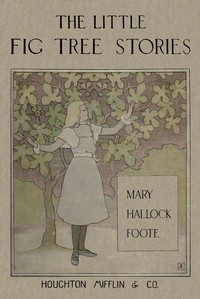
Before opening The Little Fig-tree Stories — Context and Discussion, the edition data offers a quick orientation: 36,974 words, 2 hr 41 min estimated reading time, and 14 detected text sections.
The text analysis averages about 25.8 words per sentence, while the detected sections provide another way to judge how the source is divided.
Project Gutenberg metadata also associates the work with “Conduct of life -- Juvenile fiction,” connecting these edition facts with the source record’s subject description.
Explore this collection
These alternatives are selected using recorded categories and estimated reading time.
About 161 minutes
Childrens Adventures
36,970 recorded words. 0 minutes difference from this book's estimate.
View Gutenberg source #50793About 171 minutes
Childrens Adventures
39,244 recorded words. 10 minutes difference from this book's estimate.
View Gutenberg source #39757About 147 minutes
Childrens Adventures
33,756 recorded words. 14 minutes difference from this book's estimate.
View Gutenberg source #36507Search stored excerpts and compare books → Choose by your preferences →
Choices use stored catalog measurements. Estimates vary with reading speed. A shared category is a catalog label, not a claim that two books have the same argument or literary quality.
Search reads excerpt text stored with this catalog and links to its associated Gutenberg record. The connection is stored in the site database; this tool does not recheck that every excerpt is word-for-word identical to that external record. Excerpt search does not cover every chapter and does not verify historical publication dates.
Catalog snapshot checked: 2026-09-25. Coverage: 100 public books, 100 available source excerpts.
Read the complete public-domain text at its original source.
Read on Project GutenbergIn the opening of The Little Fig-Tree Stories, Mary Hallock Foote establishes a garden on a hill slope “between the snows of the Sierra Nevada and the warm, rich valleys of the coast.” The almond trees bloom in February, and the cherry trees scold them for being too emotional. This anthropomorphic exchange sets a tone of gentle, observant humor that runs through the collection. The catalog subjects list “Conduct of life” and “Children – Conduct of life” prominently, but the excerpts show that Foote’s approach is less about direct moral instruction and more about embedding lessons within vivid, specific settings—a California mining camp, a grandfather’s farm, a canyon trail. The stories originally appeared in St. Nicholas Magazine, and the author’s note dedicates profits to a children’s hospital, hinting at a practical, compassionate bent.
Foote’s California is not a generic backdrop; it is drawn with the precision of someone who knows its geography intimately. The garden is placed “between the pine belt and the fruit belt,” and the almond trees are “of very ancient stock.” In “A Visit to John’s Camp,” the boy Jack rides through a landscape of “black lava rocks in the sun” that are “like heated ovens,” and the river’s “faint ripple” is the only sound. The trail has a “bad place” where a cayuse must keep “two of his feet on firm ground.” These details are not decorative; they shape the narrative. The environment is a source of both beauty and risk, and the characters’ actions are often responses to its demands. The catalog subjects emphasize moral behavior, but the excerpts suggest that Foote is equally interested in how place tests and teaches a child.
Foote builds tension through concrete, mundane objects. When Jack searches for John, he finds “John’s canvas overalls, his pick and shovel, a gold-pan, and a wheelbarrow of home construction.” The wheelbarrow’s only shop-made part is the wheel; the rest is John’s own work. The overalls are “like a picture of John himself.” These items, lying unused, make Jack feel “more dismal than ever.” Foote does not describe Jack’s fear abstractly; she lets the tools and clothing carry the emotional weight. Later, when John explains he was camped elsewhere, the resolution is understated: “Adventures do very well to tell of afterward, but they do not always make a happy journey.” The catalog subjects list “Grandfathers” and “Parent and child,” but the excerpts show that Foote’s real interest is in the quiet, telling detail that reveals character and situation.
The excerpts offer only two complete stories—the almond-tree fable and Jack’s visit to John’s camp—plus the table of contents. The fable uses talking trees and a gently ironic narrator; the camp story is a realistic third-person narrative with a boy’s perspective. This range suggests the collection may shift between fantasy and realism, but the excerpts do not reveal how the other stories (such as “Dream Horses” or “The Garret at Grandfather’s”) handle that blend. The catalog subjects include “Children’s stories” and “Conduct of life,” but the excerpts show no overt moralizing. Jack’s anxiety about John is resolved naturally, without a lesson. Readers should expect a varied collection, not a uniform one, and should be cautious about assuming the fable’s tone carries through all fourteen sections.
Foote’s own illustrations accompany the text, and her background as a writer of adult fiction (such as The Chosen Valley) may inform the careful construction of these children’s stories. Readers interested in regional American literature or the development of children’s publishing at the turn of the century will find this a compact example. The excerpts reward attention to how Foote uses physical objects and landscape to convey emotion—a technique that avoids sentimentality while still engaging a young audience.
There’s a particular hush in Foote’s fig-tree stories, a boy alone with the pines and the diggings, where observation outlasts lesson. It made me think of that other quiet volume, Olive Leaves; Or, Sketches of Character — Key Ideas to Explore, which holds a similar patience—not for plot, but for the way people surface, slowly, like stones in a dry creek bed. That kind of looking stays with you.
Answer a few questions and save a private reflection on this device.









