About 97 minutes
Charles Dickens' Children Stories — Background and Themes
Childrens Adventures
22,230 recorded words. 0 minutes difference from this book's estimate.
View Gutenberg source #37121
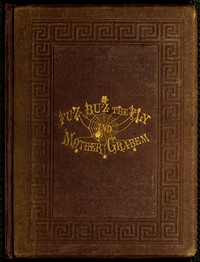
This digital edition of The Wonderful Stories of Fuz-Buz the Fly and Mother Grabem the Spider — A Closer Reading is described by source-level measurements including 22,246 words, 1 hr 37 min estimated reading time, and 3 detected text sections.
The text analysis averages about 19.5 words per sentence, while the detected sections provide another way to judge how the source is divided.
Project Gutenberg metadata also associates the work with “Fairy tales,” connecting these edition facts with the source record’s subject description.
Explore this collection
These alternatives are selected using recorded categories and estimated reading time.
About 97 minutes
Childrens Adventures
22,230 recorded words. 0 minutes difference from this book's estimate.
View Gutenberg source #37121About 97 minutes
Childrens Adventures
22,237 recorded words. 0 minutes difference from this book's estimate.
View Gutenberg source #74849About 104 minutes
Childrens Adventures
23,813 recorded words. 7 minutes difference from this book's estimate.
View Gutenberg source #24130Search stored excerpts and compare books → Choose by your preferences →
Choices use stored catalog measurements. Estimates vary with reading speed. A shared category is a catalog label, not a claim that two books have the same argument or literary quality.
Search reads excerpt text stored with this catalog and links to its associated Gutenberg record. The connection is stored in the site database; this tool does not recheck that every excerpt is word-for-word identical to that external record. Excerpt search does not cover every chapter and does not verify historical publication dates.
Catalog snapshot checked: 2026-09-25. Coverage: 100 public books, 100 available source excerpts.
Read the complete public-domain text at its original source.
Read on Project GutenbergThe book opens not with a human narrator but with a detailed description of Mrs. Grabem's web, spun across the crotch of an old apple tree. The young spiders mistake dew drops for diamonds, turquoises, and gold, a moment that immediately establishes the story's playful attention to perspective. Mrs. Grabem corrects them with a tale about her ancestor who inspired Robert Bruce, linking spider lore to Scottish history. This framing device—a spider telling stories to her children—sets up the nested narrative structure that follows.
The opening chapters linger on the physical texture of spider life. Mrs. Grabem knits a long dark cave of cobweb for sleeping, and the web is described as a home with distinct rooms. The young spiders chase each other along threads, and the narrator notes that the apples above them look to the young spiders like stars do to human children. These details ground the fantastical in precise observation: the web is a place of both play and danger, as when a great wasp breaks it. The family trembles during storms, and the old lady mends her web with labour. The domestic routine—eating, sleeping, storytelling—is rendered with the same care as the more extravagant fairy tales that follow.
The storytelling is layered: Mrs. Grabem tells a story about her ancestor, then the fly Fuz-Buz is pressed into service. When Fuz-Buz threatens to have giants gobble the young spiders, Mrs. Grabem shakes him and commands him to tell a story. He meekly obeys, launching into the tale of Krusstikuss and Growlegrum. This hierarchy of narrators—mother, then captive fly—creates a tension between authority and reluctance. The fly's story features ogres descended from an Afrite and a Ghoul, and includes a king who dies of whooping cough in his second summer. The absurdity of these details suggests that the teller is shaping the tale for his audience, mixing menace with comedy.
The story of Krusstikuss and Growlegrum revolves around hunger. The giants lament the scarcity of babies and young ladies, and a witch cousin arranges for King Hassan to send them daily rations. The giants' preferences are specific: Krusstikuss likes babies, while Growlegrum finds young ladies' hoops disagreeable. The narrative treats cannibalism with deadpan humour, as when the giants discuss the inconvenience of walking to find food. The king's eventual fate—exile and death from teething and whooping cough—mimics human infant ailments, collapsing the distance between giant and baby. This section shows how the book uses fairy-tale logic to invert expectations about size, power, and vulnerability.
Readers should attend to the way the book shifts between the frame story and the embedded tales. The spider household's routines and the fly's reluctant storytelling create a layered narrative where each teller's personality colours the tale. The humour often depends on literal-mindedness—dew drops as gems, giants as picky eaters—and on the collision of insect-scale domesticity with grand fairy-tale conventions. The excerpts do not reveal how the frame concludes, so the relationship between the two levels remains open.
Reading about Mother Grabem’s quiet storytelling in her cobweb home brought back the gentle hush of spinning wheels. There is something tender in both—these small, domestic creatures passing time with tales, each thread and story weaving a private world. I kept thinking of Spinning-Wheel Stories — Context and Discussion while turning those pages. Spinning-Wheel Stories — Context and Discussion settled beside it in my mind, like two old friends murmuring over their yarn.
Save your reaction, strongest insight, and memorable passage.









