About 275 minutes
Uncle Wiggily's Story Book — Background and Themes
Childrens Adventures
63,226 recorded words. 8 minutes difference from this book's estimate.
View Gutenberg source #60625
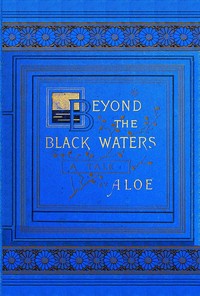
Before opening Beyond the Black Waters — Context and Discussion, the edition data offers a quick orientation: 61,328 words, 4 hr 27 min estimated reading time, and 36 detected text sections.
The text analysis averages about 16.0 words per sentence, while the detected sections provide another way to judge how the source is divided.
Project Gutenberg metadata also associates the work with “Christian life -- Juvenile fiction,” connecting these edition facts with the source record’s subject description.
Explore this collection
These alternatives are selected using recorded categories and estimated reading time.
About 275 minutes
Childrens Adventures
63,226 recorded words. 8 minutes difference from this book's estimate.
View Gutenberg source #60625About 259 minutes
Childrens Adventures
59,568 recorded words. 8 minutes difference from this book's estimate.
View Gutenberg source #66971About 256 minutes
Childrens Adventures
58,871 recorded words. 11 minutes difference from this book's estimate.
View Gutenberg source #65590Search stored excerpts and compare books → Choose by your preferences →
Choices use stored catalog measurements. Estimates vary with reading speed. A shared category is a catalog label, not a claim that two books have the same argument or literary quality.
Search reads excerpt text stored with this catalog and links to its associated Gutenberg record. The connection is stored in the site database; this tool does not recheck that every excerpt is word-for-word identical to that external record. Excerpt search does not cover every chapter and does not verify historical publication dates.
Catalog snapshot checked: 2026-09-25. Coverage: 100 public books, 100 available source excerpts.
Read the complete public-domain text at its original source.
Read on Project GutenbergThe title Beyond the Black Waters refers to the Andaman Islands, a penal colony for Indian convicts, as explained in the preface. The novel opens with the arrival of Oscar Coldstream, an Englishman, in Burma, and quickly establishes a pattern of movement between domestic interiors, jungle paths, and river journeys. A. L. O. E. uses these shifts in setting to heighten tension and underscore moral dilemmas, such as Oscar’s internal conflict between protecting his wife and following his conscience.
The narrative repeatedly contrasts light and darkness, both literal and figurative. Moonlight illuminates the clearing during the Shan attack, while Oscar’s despair is described as “the blackness of darkness for ever.” The evangelist Ko Thah Byu is introduced with “flashing eyes” that command attention, and his presence is likened to a “lighthouse at night” in the preface. These images reinforce the book’s moral framework, where physical darkness often accompanies spiritual crisis, and light signals divine intervention or human courage.
The story unfolds through a series of journeys—by boat, litter, and on foot—each punctuated by sudden, violent encounters. The attack by Shans in Chapter XVIII is typical: a peaceful procession is shattered by “crashing of boughs” and “a burst of yells.” The action is compressed into a few paragraphs, with Oscar bound to a tree before the reader can fully register the danger. This episodic structure, with its rapid shifts from calm to crisis, keeps the focus on immediate moral choices rather than extended character development.
Ko Thah Byu appears abruptly, “as if he had dropped from the skies,” and his silent authority disarms the Shan raiders. The text emphasizes his physical unremarkability—he is “past the meridian of life” with “grizzled brows”—yet his gaze exerts “an indescribable power.” This portrayal aligns with the preface’s claim that the Karen stories are factual. The evangelist’s intervention is swift and wordless, relying on gesture and presence rather than speech, which sets him apart from the more verbose European characters.
The novel moves between European, Burmese, Karen, and Shan spaces, often within a single chapter. Oscar and Io’s journey takes them from a mission station into the jungle, where they encounter Karen bearers and Shan attackers. The landscape is described in practical terms—thickets, litters, ropes—rather than exoticized. This matter-of-fact treatment of cultural boundaries reflects the book’s didactic purpose: the physical journey mirrors the spiritual one, and each new setting presents a test of faith or courage.
Readers should attend to the way A. L. O. E. uses setting as a moral stage. The repeated pattern of travel, crisis, and rescue is not merely adventure but a framework for exploring conscience and providence. The preface’s distinction between the factual Karen traditions and the fictional convict story offers a useful lens: the novel is most effective when it grounds its moral lessons in specific, observed details of place and custom.
Some evenings, reading about Oscar and Io’s quiet endurance among the Karen people, I found myself remembering a different kind of steadiness—the small, orderly world of a child learning to keep house. There is something tender in both: the way faith or a clean shelf can hold a life together. My old copy of Nellie's Housekeeping Little Sunbeams Series — Reading Notes sat nearby, and the pairing felt, strangely, like two old friends nodding to each other.
Build a private reading journal entry for this title.









