About 267 minutes
Beyond the Black Waters — Context and Discussion
Childrens Adventures
61,328 recorded words. 8 minutes difference from this book's estimate.
View Gutenberg source #59619
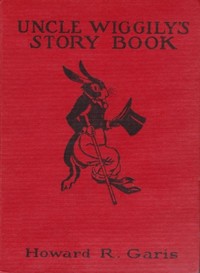
This digital edition of Uncle Wiggily's Story Book — Background and Themes is described by source-level measurements including 63,226 words, 4 hr 35 min estimated reading time, and 37 detected text sections.
The text analysis averages about 13.5 words per sentence, while the detected sections provide another way to judge how the source is divided.
Project Gutenberg metadata also associates the work with “Short stories,” connecting these edition facts with the source record’s subject description.
Explore this collection
These alternatives are selected using recorded categories and estimated reading time.
About 267 minutes
Childrens Adventures
61,328 recorded words. 8 minutes difference from this book's estimate.
View Gutenberg source #59619About 283 minutes
Childrens Adventures
64,905 recorded words. 8 minutes difference from this book's estimate.
View Gutenberg source #60149About 285 minutes
Childrens Adventures
65,402 recorded words. 10 minutes difference from this book's estimate.
View Gutenberg source #36501Search stored excerpts and compare books → Choose by your preferences →
Choices use stored catalog measurements. Estimates vary with reading speed. A shared category is a catalog label, not a claim that two books have the same argument or literary quality.
Search reads excerpt text stored with this catalog and links to its associated Gutenberg record. The connection is stored in the site database; this tool does not recheck that every excerpt is word-for-word identical to that external record. Excerpt search does not cover every chapter and does not verify historical publication dates.
Catalog snapshot checked: 2026-09-25. Coverage: 100 public books, 100 available source excerpts.
Read the complete public-domain text at its original source.
Read on Project GutenbergThe book opens with a direct address from Uncle Wiggily himself, titled "Uncle Wiggily's Greeting," which immediately establishes a conversational tone. He tells readers this volume is "quite different" because it includes adventures with real children as well as animal friends. The greeting lists specific story occasions—toothache, a good boy, a freckled girl, a bad boy, Christmas, birthday, getting lost, falling in a mud puddle, measles, and mumps—giving a clear preview of the range of everyday and extraordinary events to come. This framing invites readers to dip in according to their own experiences or needs.
The table of contents lists 36 stories, each with a title that signals a clear premise: "Uncle Wiggily's Toothache," "Uncle Wiggily and the Mud Puddle," "Uncle Wiggily's Christmas," and so on. The greeting explicitly states there is "a story for nearly every occasion in the life of a little boy or girl." This episodic structure means readers can start anywhere without losing continuity. The stories are self-contained, each resolving its own small conflict—whether it's a toothache, a lost boy, or a holiday celebration. A first-time reader might choose a story based on a familiar situation, such as having the measles or getting lost, and find comfort in seeing how Uncle Wiggily handles it.
In the excerpt about the thoughtless boy, Uncle Wiggily's speech is polite and measured: "I must think up some way of teaching him a lesson!" The animal characters—Charlie the rooster boy and Arabella the little hen girl—speak in a colloquial, childlike manner, with lines like "I wish he'd let us alone" and "I wouldn't care if he had the mumps and toothache at the same time!" The narrator uses playful descriptions, such as "twinkling his pink nose like the frosting on top of an orange shortcake." This blend of gentle humor and direct dialogue helps readers quickly grasp each character's personality. The bunny gentleman's calm, problem-solving attitude contrasts with the boy's thoughtless aggression, setting up a clear moral dynamic.
The excerpt shows a recurring pattern: a problem is introduced, Uncle Wiggily is asked for help, he observes the situation, and then devises a clever, non-violent solution. Here, the boy throws stones; Uncle Wiggily uses pine gum and chicken feathers to make the boy think he has chicken-pox. The solution is imaginative and humorous, not punitive. This pattern likely repeats across the collection, giving young readers a predictable structure that builds anticipation. The narrator also includes asides, like "as they say in fairy books," which acknowledge the story's own conventions. First-time readers can expect each tale to follow a similar arc of trouble, consultation, and inventive resolution.
The greeting promises "beautiful pictures," and the excerpt contains visual, physical comedy: a stone knocks off Uncle Wiggily's tall silk hat, and later he applies sticky gum spots to the sleeping boy's face. These moments are described with concrete detail—"Bang! bounced a stone on Uncle Wiggily's tall silk hat"—making them easy to imagine or illustrate. The humor relies on slapstick and absurdity, such as a rabbit in a silk hat and a rooster with a comb on his head. For a first reading, these vivid images help maintain engagement, especially for children who may be listening to the stories read aloud. The combination of wordplay and action suggests the book is designed for both silent reading and oral performance.
Readers new to Uncle Wiggily should feel free to browse the table of contents and pick a story that matches their mood or curiosity. The greeting itself functions as a map, highlighting which tales address common childhood experiences. Because each story stands alone, there is no need to read in order. The consistent voice and problem-solving pattern will quickly become familiar, making subsequent stories easier to follow. Pay attention to how Uncle Wiggily's gentle authority and the animal characters' lively dialogue create a reassuring world where every problem has a creative, kind solution.
There’s a particular gentleness in how Uncle Wiggily’s Story Book opens, almost like a hand held out before a walk. It reminded me of In Story-land — Story, Setting & Ideas — that same unhurried way of slipping into tales, where the setting itself feels like a friend. I kept thinking of quiet afternoons, the kind where a book simply lets you sit. In Story-land — Story, Setting & Ideas holds that same softness, somehow.
Build a private reading journal entry for this title.









