About 77 minutes
Mabel's mishap — A Reader’s Guide
Childrens Adventures
17,680 recorded words. 2 minutes difference from this book's estimate.
View Gutenberg source #72983
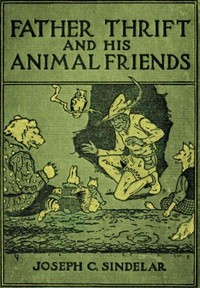
Before opening Father Thrift and His Animal Friends — A Closer Reading, the edition data offers a quick orientation: 18,096 words, 1 hr 19 min estimated reading time, and 22 detected text sections.
The text analysis averages about 12.7 words per sentence, while the detected sections provide another way to judge how the source is divided.
Project Gutenberg metadata also associates the work with “Animals -- Juvenile fiction,” connecting these edition facts with the source record’s subject description.
Explore this collection
These alternatives are selected using recorded categories and estimated reading time.
About 77 minutes
Childrens Adventures
17,680 recorded words. 2 minutes difference from this book's estimate.
View Gutenberg source #72983About 82 minutes
Childrens Adventures
18,688 recorded words. 3 minutes difference from this book's estimate.
View Gutenberg source #29597About 75 minutes
Childrens Adventures
17,156 recorded words. 4 minutes difference from this book's estimate.
View Gutenberg source #29595Search stored excerpts and compare books → Choose by your preferences →
Choices use stored catalog measurements. Estimates vary with reading speed. A shared category is a catalog label, not a claim that two books have the same argument or literary quality.
Search reads excerpt text stored with this catalog and links to its associated Gutenberg record. The connection is stored in the site database; this tool does not recheck that every excerpt is word-for-word identical to that external record. Excerpt search does not cover every chapter and does not verify historical publication dates.
Catalog snapshot checked: 2026-09-25. Coverage: 100 public books, 100 available source excerpts.
Read the complete public-domain text at its original source.
Read on Project GutenbergThe book opens with a queer little old man arriving in a quaint town and soon moving into the forest, where he begins instructing animals in useful trades. The narrative structure relies on short, episodic chapters, each introducing a new animal or problem. The prose is direct and repetitive, often using exclamations like “My, oh, my!” to convey surprise or delight. The setting shifts between the old man’s cabin, the maple grove, and the broader forest, creating a rhythm of domestic comfort and outdoor labor.
Recurring images include the “thrifty tree” with copper trunk and silver leaves, mentioned in the introduction, and the repeated motif of boiling sap into syrup and sugar. The bear’s astonishment at the transformation of sap—“the water in it goes away in steam”—exemplifies the book’s method of explaining processes through animal reactions.
The book is divided into 22 short chapters, each functioning almost as a standalone lesson. The chapter titles, such as “How the Woodpeckers Helped” and “The Busy Beavers,” signal a pattern: an animal encounters a problem, Father Thrift offers a solution, and the animal learns a virtue like industry or honesty. This structure makes the narrative predictable, suitable for early readers.
Repetition reinforces key ideas. For instance, the bear’s disbelief that boiling improves sap—“I told you the fire would spoil it!”—is followed by his delighted reversal. Such moments recur across chapters, with animals expressing skepticism before being convinced. The text also repeats phrases like “the best thing I have ever tasted” to emphasize satisfaction.
The episodic nature means each chapter can stand alone, but cumulative references to earlier events (e.g., the bear staying on as a helper) create a loose continuity. The final chapters, “After Many Days,” suggest a longer timeline, though the excerpts do not reveal a conclusive ending.
The story alternates between the cozy interior of Father Thrift’s home and the open forest. Early chapters describe him sleeping in the forest with the bear—“a man and a bear sleeping side by side in the same room”—blending domestic comfort with wild companionship. Later, the setting moves to a maple grove for sap collection, then to a garden for plowing.
This movement is not merely scenic; it structures the lessons. Indoor scenes often involve cooking or crafting, while outdoor scenes involve gathering or building. The bear’s transition from wild creature to helper mirrors this spatial shift: he begins as a forest dweller, then shares a room and works alongside the old man.
The forest itself is described in seasonal terms. The spring chapter “Robins, Crows, and Blackbirds” emphasizes renewal: “the whole forest was glad. Why? Because it was spring.” Such passages ground the moral lessons in natural cycles, reinforcing the idea that thrift aligns with the rhythms of the year.
Two images recur throughout the excerpts: the transformation of sap into syrup and sugar, and the repeated exclamation of sweetness. The maple-sugaring episode is described in detail: boring holes, tapping spouts, boiling sap until “the water in it goes away in steam.” The bear’s reaction—“it is the best thing I have ever tasted”—is echoed in other chapters, such as when he tastes the finished sugar.
This process serves as a metaphor for work yielding reward. The bear learns that effort (boiling) improves the product, a lesson in patience. The “thrifty tree” from the introduction—with its copper trunk, silver leaves, and golden blossoms—is never described in the story excerpts, but its image of a tree producing “health and wealth and honest joy” reinforces the theme of natural abundance through careful use.
The word “sweet” appears repeatedly, not just for maple products but also for honey and other treats. This sensory repetition anchors abstract virtues like thrift in tangible, pleasurable outcomes.
The animals are not merely personified; they are students of practical skills. The bear learns to tap trees, stir boiling sap, and pull a plow. Other chapters introduce woodpeckers, beavers, foxes, squirrels, and birds, each with a specific task or lesson. The chapter “How the Woodpeckers Helped” suggests cooperative problem-solving, while “The Busy Beavers” likely demonstrates industry.
Dialogue is simple and functional. The bear’s hesitant request—“Will—you—let—me—stay—if—I—do?”—shows his emotional growth. Father Thrift responds with steady encouragement: “I shall be glad to have you stay, always.” This pattern of request and acceptance recurs, establishing a supportive community.
The animals’ mistakes are corrected gently. The bear’s fear that boiling “would spoil it” is met with patient explanation. The book thus models a teaching relationship where errors are opportunities for learning, not punishment.
Readers will find that the book’s charm lies in its methodical, hands-on approach to moral instruction. Each chapter builds a small world where work is rewarding and cooperation is natural. The illustrations by Helen Geraldine Hodge, though not reproduced here, likely complement the text’s focus on animals and tools. For the best experience, read the chapters in order to watch the bear’s gradual transformation from a skeptical creature to a willing helper.
Sometimes, after closing Father Thrift, I find myself thinking of the odd, rule-bound peace in that forest—how even the plowing felt like a ritual. It drifts me to something wilder, though: William—the outlaw — Reading Notes, where order topples so merrily. Both worlds feel like old neighbors—one tames the chaos, the other lets it play.
Build a private reading journal entry for this title.









