About 75 minutes
Funny Little Socks Being the Fourth Book — A Closer Reading
Childrens Adventures
17,156 recorded words. 2 minutes difference from this book's estimate.
View Gutenberg source #29595
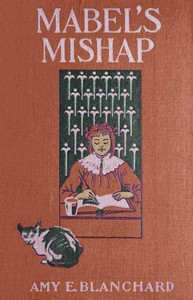
The catalog record for Mabel's mishap — A Reader’s Guide provides practical reading context through 17,680 words, 1 hr 17 min estimated reading time, and 11 detected text sections.
The text analysis averages about 16.2 words per sentence, while the detected sections provide another way to judge how the source is divided.
Project Gutenberg metadata also associates the work with “Children's stories,” connecting these edition facts with the source record’s subject description.
Explore this collection
These alternatives are selected using recorded categories and estimated reading time.
About 75 minutes
Childrens Adventures
17,156 recorded words. 2 minutes difference from this book's estimate.
View Gutenberg source #29595About 79 minutes
Childrens Adventures
18,096 recorded words. 2 minutes difference from this book's estimate.
View Gutenberg source #43287About 82 minutes
Childrens Adventures
18,688 recorded words. 5 minutes difference from this book's estimate.
View Gutenberg source #29597Search stored excerpts and compare books → Choose by your preferences →
Choices use stored catalog measurements. Estimates vary with reading speed. A shared category is a catalog label, not a claim that two books have the same argument or literary quality.
Search reads excerpt text stored with this catalog and links to its associated Gutenberg record. The connection is stored in the site database; this tool does not recheck that every excerpt is word-for-word identical to that external record. Excerpt search does not cover every chapter and does not verify historical publication dates.
Catalog snapshot checked: 2026-09-25. Coverage: 100 public books, 100 available source excerpts.
Read the complete public-domain text at its original source.
Read on Project GutenbergThe story begins with Mabel at a rainy window, sweeping paper dolls to the floor in a gesture of boredom that immediately establishes her restless, imaginative nature. Her wish for a twin named Belle—prompted by a glance at a mirror—echoes Lewis Carroll's Through the Looking-Glass, a reference that signals the playful, self-aware voice of the narration. Blanchard's prose moves briskly between Mabel's chatter and her mother's gentle corrections, a rhythm that defines the early chapters.
From this domestic opening, the action shifts outdoors: a red auction flag across the street draws Mabel into a world of transactions and chance encounters. The narrative pace quickens as she pursues a rare book, leading her to a Quaker woman's home where the story's moral weight settles. The language remains plain but precise, with dialogue carrying much of the characterization.
The narrative voice in Mabel's Mishap is not uniform. In the opening chapter, the prose is close to Mabel's perspective, rendered in short sentences and direct questions: “What is it for? Do you suppose he has scarlet fever?” The mother’s replies are patient but clipped, creating a natural back-and-forth. Later, when Mabel and Harold visit Mrs. Knight, the language adopts a more formal, almost biblical cadence in the Quaker’s speech: “I would scarce tell thee to take it, unless I meant it.” This shift is not merely decorative; it marks a change in the story’s emotional register, from playful curiosity to earnest negotiation.
The narrator occasionally steps back to summarize, as when Mabel’s “radiant face expressed her thanks, without her words.” These brief omniscient touches remind the reader that an adult hand is guiding the tale, even as the child’s viewpoint dominates. The effect is a layered voice that can be both intimate and instructive.
Blanchard controls pace by alternating dialogue with action. Early scenes linger on Mabel’s indoor games, with long passages of conversation that slow time to a child’s pace. Once the auction flag appears, the tempo accelerates: Mabel “was out of the door and on her way down the steps by this time.” The search for the book is told in a series of quick exchanges and short paragraphs, building momentum toward the encounter with Mrs. Knight.
At Mrs. Knight’s house, the pace again slows. The Quaker woman’s measured speech and the description of the cat create a pause before the resolution. The return home is marked by Harold’s observation about the delayed cars, a small detail that stretches the journey’s tension. This rhythmic variation—bustle, stillness, bustle—gives the story a natural ebb and flow, mirroring Mabel’s own shifts from impatience to gratitude.
Several details recur with quiet significance. The mirror that first appears when Mabel pretends to see her twin returns implicitly in the theme of reflection and honesty: Mabel must prove she is “honest and faithful” to regain her father’s trust. The red auction flag, initially a mere curiosity, becomes the catalyst for the entire plot. The cat, introduced as a lost pet, is later valued by Mrs. Knight above a rare book, a reversal that underscores the story’s moral about kindness over material worth.
These repeated elements are not heavy-handed; they are woven into the narrative as natural parts of Mabel’s world. The book itself—an old volume with “dull covers”—is described only briefly, yet it anchors the quest. Blanchard trusts readers to notice these connections without explicit commentary, a restraint that gives the story its quiet depth.
Blanchard uses plain, concrete language to chart Mabel’s moral development. Early on, Mabel’s speech is full of childish inventions—“nauction” for auction—and self-centered wishes. By the end, she asks, “Was it very wrong to stay, mamma?” The vocabulary remains simple, but the syntax grows more complex as Mabel learns to consider others. The narrator’s descriptions also shift: Mabel’s “radiant face” replaces her earlier “mischievous” looks, signaling an internal change without overt moralizing.
The Quaker’s dialect—“thee” and “thy”—stands out against the standard English of the other characters, marking her as both outsider and moral anchor. This linguistic contrast reinforces the story’s theme that wisdom can come from unexpected sources. The prose never becomes preachy; instead, it lets the characters’ words and actions carry the lesson.
Readers attentive to language will notice how Blanchard uses small shifts in diction and sentence length to signal changes in mood and moral stakes. The story rewards a slow reading that catches these nuances: the way a child’s question becomes an adult’s insight, or how a repeated object—a mirror, a flag, a cat—gathers meaning across chapters. This is a book where the quiet details matter as much as the plot.
There’s something tender about watching a restless girl like Mabel learn that honesty has its own quiet weight, the way a single misstep can reshape a whole childhood. It reminds me of those older household conversations where every question felt answered slowly, as if words mattered more than speed. Cousin Lucy's Conversations By the Author of the Rollo Books — Themes and Context holds that same patient hush, like remembering a room where wisdom arrived unnoticed.
Your answers remain private and are stored only in this browser.









