About 227 minutes
Heimatlos: Two stories for children, and for those who love children — A Closer Reading
Childrens Adventures
52,152 recorded words. 1 minutes difference from this book's estimate.
View Gutenberg source #38626
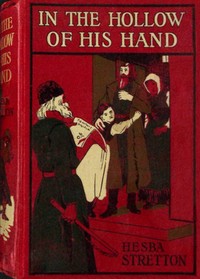
In the hollow of His hand — Context and Discussion can be approached with a clearer sense of reading commitment from its source measurements: 52,289 words, 3 hr 48 min estimated reading time, and 5 detected text sections.
The text analysis averages about 17.0 words per sentence, while the detected sections provide another way to judge how the source is divided.
Project Gutenberg metadata also associates the work with “Children's stories,” connecting these edition facts with the source record’s subject description.
Explore this collection
These alternatives are selected using recorded categories and estimated reading time.
About 227 minutes
Childrens Adventures
52,152 recorded words. 1 minutes difference from this book's estimate.
View Gutenberg source #38626About 238 minutes
Childrens Adventures
54,595 recorded words. 10 minutes difference from this book's estimate.
View Gutenberg source #70736About 215 minutes
Childrens Adventures
49,272 recorded words. 13 minutes difference from this book's estimate.
View Gutenberg source #23501Search stored excerpts and compare books → Choose by your preferences →
Choices use stored catalog measurements. Estimates vary with reading speed. A shared category is a catalog label, not a claim that two books have the same argument or literary quality.
Search reads excerpt text stored with this catalog and links to its associated Gutenberg record. The connection is stored in the site database; this tool does not recheck that every excerpt is word-for-word identical to that external record. Excerpt search does not cover every chapter and does not verify historical publication dates.
Catalog snapshot checked: 2026-09-25. Coverage: 100 public books, 100 available source excerpts.
Read the complete public-domain text at its original source.
Read on Project GutenbergHesba Stretton’s In the Hollow of His Hand opens with a preface that frames the novel as a documentary of persecution, citing two sources: a pamphlet on the Stundists and George Kennan’s Siberia and the Exile System. The narrative then moves through a series of sharply contrasted scenes—from the quiet of a Russian forest to the chaos of a convict train. Stretton’s structure alternates between close domestic moments and panoramic views of collective suffering, a rhythm that mirrors the prisoners’ own jarring transitions.
Two images dominate the excerpts: chains and trains. Chains are described with clinical precision—prisoners are “chained two and two together,” their leg-chains heavy, their heads shaved on one side. The train, meanwhile, becomes a mobile prison: “the ceaseless motion of the rumbling train became a positive torture to the cramped bodies.” Stretton links these images to the emotional state of the characters. Michael’s father, Alexis, is chained to a “vicious and brutal-looking criminal,” the physical bond underscoring his loss of autonomy. The train’s “wailing of children and the loud hysterical sobbing of women” blends with the mechanical sounds, turning the vehicle into an instrument of anguish. These recurring details do not merely describe hardship; they structure the reader’s experience of relentless, mechanized oppression.
Stretton moves fluidly between intimate family groupings and the mass of exiles. In one passage, Michael flings his arms around his father’s neck, a private cry of “Father!” amid the jostling crowd. Immediately, the narrative pulls back to show “nearly two hundred convicts, all dressed alike in long grey overcoats.” This oscillation recurs: Tatiania is isolated in her corner with little Clava, while the waggon is “overcrowded” with children on the floor. The effect is to make the reader feel both the individual’s pain and the scale of the tragedy. Stretton often uses the family unit—the Kondratys, the Sergius family—as a lens, then widens to the convoy, the train, the Siberian road. This structural choice prevents the suffering from becoming abstract; each face in the crowd has been briefly named and seen.
The excerpts show a deliberate contrast between natural and institutional spaces. Early chapters are set in the forest, where the children’s service takes place—a scene of fragile peace. Later, the prison yard is a place of “oaths and blows,” where prisoners are “driven like cattle.” The train journey erases the natural world entirely: the “sweet wind” blows in, but the carriage remains a “torture.” Stretton uses setting to mark shifts in power. In the forest, the Stundists gather freely; in the yard, they are herded. The train is a liminal space—neither home nor destination—where time becomes “succeeding days and nights, night and day.” This blurring of temporal markers heightens the sense of endless ordeal. The settings are not backdrops but active forces that shape the characters’ physical and emotional states.
Sound plays a structural role in the excerpts. The convoy’s “ominous discord” makes Michael shiver; the train’s “rumbling” and “throbbing” are punctuated by “despairing shrieks.” Against this noise, Stretton places moments of quiet resistance: Marfa sings “soothing songs” to little Clava, and Alexis smiles with “noble serenity.” The contrast between cacophony and song mirrors the spiritual conflict at the novel’s heart. The Stundists’ hymns are not described in detail, but their absence is felt in the prison’s din. Stretton uses sound to mark the boundaries between order and chaos, faith and despair. The reader is invited to listen for the moments when human voice rises above mechanical roar—a pattern that gives the narrative its emotional rhythm.
The journey from Knishi to the Volga, then to Siberia, is the novel’s backbone. Stretton breaks this journey into discrete episodes: the forest gathering, the arrest, the prison yard, the train, the barge. Each scene is a stage in a forced migration. The movement is always forward, never backward, creating a sense of inexorable progress. Yet within this linear structure, Stretton inserts flashbacks and letters (such as Father Cyril’s letter) that provide context. The journey is both physical and spiritual: the exiles travel toward an unknown destination, but their faith is tested and refined along the way. The structure mirrors the Stundist experience of displacement, where home is lost and the road becomes the only constant.
Stretton’s novel is best approached as a sequence of linked tableaux rather than a continuous plot. Readers may find it helpful to note how each scene reworks the same core tensions—between family and state, faith and force, silence and song. The preface’s claim that the story is “true to fact” invites attention to the documentary details, but the emotional power lies in the recurring images and the movement between intimate grief and collective catastrophe.
I’ve always felt In the Hollow of His Hand holds its chains and trains closer to the bone than most admit—those iron rhythms of faith under duress. It made me recall another quiet soul, the only child in My friend Doggie; or, An only child — Inside the Classic, whose small, loyal world hums with a similar ache for company. Different cages, same gentle heartbeat.
Answer a few questions and save a private reflection on this device.









