About 186 minutes
Playing Santa Claus, and Other Christmas Tales — Context and Discussion
Childrens Adventures
42,699 recorded words. 0 minutes difference from this book's estimate.
View Gutenberg source #54803
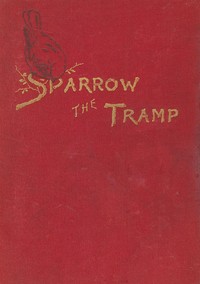
Before opening Sparrow the tramp: A fable for children — Background and Themes, the edition data offers a quick orientation: 42,735 words, 3 hr 6 min estimated reading time, and 25 detected text sections.
The text analysis averages about 17.0 words per sentence, while the detected sections provide another way to judge how the source is divided.
Project Gutenberg metadata also associates the work with “Conduct of life -- Juvenile fiction,” connecting these edition facts with the source record’s subject description.
Explore this collection
These alternatives are selected using recorded categories and estimated reading time.
About 186 minutes
Childrens Adventures
42,699 recorded words. 0 minutes difference from this book's estimate.
View Gutenberg source #54803About 185 minutes
Childrens Adventures
42,433 recorded words. 1 minutes difference from this book's estimate.
View Gutenberg source #75192About 183 minutes
Childrens Adventures
42,012 recorded words. 3 minutes difference from this book's estimate.
View Gutenberg source #37147Search stored excerpts and compare books → Choose by your preferences →
Choices use stored catalog measurements. Estimates vary with reading speed. A shared category is a catalog label, not a claim that two books have the same argument or literary quality.
Search reads excerpt text stored with this catalog and links to its associated Gutenberg record. The connection is stored in the site database; this tool does not recheck that every excerpt is word-for-word identical to that external record. Excerpt search does not cover every chapter and does not verify historical publication dates.
Catalog snapshot checked: 2026-09-25. Coverage: 100 public books, 100 available source excerpts.
Read the complete public-domain text at its original source.
Read on Project GutenbergFrom the first breakfast-table squabble over a sugar lump, Lily F. Wesselhoeft establishes a world where children and animals converse as equals. Posy’s half-truths—‘I was only just tasting it to see if it was a real sweet lump’—and Tom’s blunt accusations set a tone of moral scrutiny that runs through the book. The parrot, Mrs. Polly, speaks in clipped, irritable phrases (‘Rats! rats!’), while the canary offers gentle correction. Wesselhoeft uses these vocal contrasts to build distinct personalities without lengthy description. The sparrow’s later journey into Graywhisker’s rat-hole shifts the setting from domestic to subterranean, where the prose becomes more sensory—‘dark as a pocket,’ ‘close and musty atmosphere’—and the stakes become physical.
Wesselhoeft’s dialogue does more than advance plot; it defines each creature’s nature. Posy’s speech is full of quick rationalizations—‘I didn’t mean to eat it, but it went all to pieces in my mouth’—while Tom speaks in blunt judgments: ‘That’s a story.’ The parrot’s repetitive ‘Rats!’ and the canary’s polite defense of Posy (‘she’s kind and good’) show how Wesselhoeft uses short, patterned utterances to signal temperament. Even the sparrow’s internal monologue during the rat-hole ordeal—‘I will get out, I won’t give up’—reveals his determination through simple, resolute phrasing. The author avoids long descriptive passages, letting the characters’ own words carry their personalities.
The sparrow’s expedition into Graywhisker’s burrow is the most sustained action sequence in the excerpts. Wesselhoeft builds tension through sensory details: the darkness ‘like a pocket,’ the ‘stifling’ air, the disorienting ‘three holes just alike.’ The sparrow’s methodical search—rumpling the bed, pecking the egg, retrieving the ribbon—shows a practical, mischievous hero. His moment of doubt (‘What a fool I was’) and his rallying thought of his family give the episode emotional weight. The author uses the confined space to heighten the contrast between the sparrow’s usual open-air life and this claustrophobic trial, making the eventual ray of light a genuine relief.
Wesselhoeft’s fable teaches through action rather than sermon. The sparrow’s theft of the ribbon is framed as a rescue, not a crime, and his destruction of the egg is a ‘mischievous’ act against a thief. The barn-cat’s cooperative hunting and the gray kitten’s eagerness to help model positive social behavior. Meanwhile, Posy’s sugar-lump deception and her attempted tail-tweaking of Mrs. Polly show childish mischief that the animals themselves critique. The author lets readers draw their own conclusions: the parrot’s complaint about having her tail pulled is met with the canary’s reminder that Posy is ‘kind and good,’ suggesting that faults and virtues coexist.
The book moves between the human household and the animal world, but Wesselhoeft treats both with equal seriousness. The breakfast room, with its china-closet and bird cages, is a stage for small dramas of honesty and temptation. The rat-hole, by contrast, is a dark, cramped labyrinth where the sparrow’s survival depends on memory and nerve. The author uses scale to create tension: the sparrow is small enough to hop into a mouse-hole, yet the journey feels epic. Descriptions of the rat’s hoard—crusts, rags, a hen’s egg—ground the fantasy in domestic detail. This interplay of familiar and strange keeps the story accessible while allowing for genuine adventure.
Readers will find that Wesselhoeft’s fable rewards attention to its small verbal cues. The way a character speaks—Posy’s evasions, the parrot’s bluntness, the sparrow’s self-encouragement—carries as much weight as the events themselves. The rat-hole episode, in particular, shows how the author can transform a simple premise into a gripping test of will. This is a story that trusts its audience to notice the difference between a lie and a mistake, and to cheer for a tramp sparrow who learns that home is worth fighting for.
I keep thinking about that sparrow, how small he was and how much the truth mattered to him. It reminded me of another old tale, Father Thrift and His Animal Friends — A Closer Reading, where the animals carry a quieter kind of courage. Both left me feeling oddly comforted, like a familiar tune I couldn’t quite place.
Your answers remain private and are stored only in this browser.









