About 186 minutes
Playing Santa Claus, and Other Christmas Tales — Context and Discussion
Childrens Adventures
42,699 recorded words. 1 minutes difference from this book's estimate.
View Gutenberg source #54803
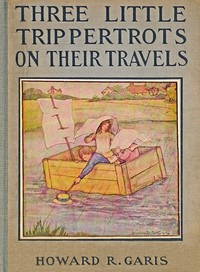
The catalog record for Three little Trippertrots on their travels — Inside the Classic provides practical reading context through 42,433 words, 3 hr 5 min estimated reading time, and 26 detected text sections.
The text analysis averages about 14.4 words per sentence, while the detected sections provide another way to judge how the source is divided.
Project Gutenberg metadata also associates the work with “Fantasy fiction,” connecting these edition facts with the source record’s subject description.
Explore this collection
These alternatives are selected using recorded categories and estimated reading time.
About 186 minutes
Childrens Adventures
42,699 recorded words. 1 minutes difference from this book's estimate.
View Gutenberg source #54803About 186 minutes
Childrens Adventures
42,735 recorded words. 1 minutes difference from this book's estimate.
View Gutenberg source #68899About 183 minutes
Childrens Adventures
42,012 recorded words. 2 minutes difference from this book's estimate.
View Gutenberg source #37147Search stored excerpts and compare books → Choose by your preferences →
Choices use stored catalog measurements. Estimates vary with reading speed. A shared category is a catalog label, not a claim that two books have the same argument or literary quality.
Search reads excerpt text stored with this catalog and links to its associated Gutenberg record. The connection is stored in the site database; this tool does not recheck that every excerpt is word-for-word identical to that external record. Excerpt search does not cover every chapter and does not verify historical publication dates.
Catalog snapshot checked: 2026-09-25. Coverage: 100 public books, 100 available source excerpts.
Read the complete public-domain text at its original source.
Read on Project GutenbergThe Trippertrot children—Mary, Tommy, and Johnny—are introduced in the midst of a runaway milk wagon, a predicament that typifies the book's blend of mundane errands and sudden fantasy. The milkman, who delivers to their house early each morning, recognizes them on the street and offers a ride home, but his horse bolts, leaving the children to cuddle in the straw as the wagon races past houses and telegraph poles. This opening episode establishes a pattern: ordinary objects and routines (milk delivery, lost letters, grocery wagons) become springboards for unexpected travel and mild peril.
The author, Howard R. Garis, was known for serialized bedtime stories, and the book's episodic structure—twenty numbered adventures—reflects its origin as nightly telephone readings. Each chapter presents a self-contained incident, often resolved by a kindly adult or a whimsical twist, such as the fisherman who pours milk into his bathtub to catch eels and cheese bits.
The milk wagon episode is a concentrated example of the book's narrative technique. The children wake to find the horse galloping, and Mary initially mistakes the motion for the world moving past them: “everything is sailing past me so very fast—trees, and houses and people and telegraph poles.” Tommy corrects her, explaining that they are the ones moving, like a train. This small moment of perceptual confusion is typical of the book’s gentle humor.
The children’s response is not panic but drowsy acceptance. They “cuddled down farther into the warm straw” even as the horse runs away. The straw, mentioned repeatedly, becomes a motif of comfort amid chaos—a soft, warm refuge in a vehicle that is both familiar (a milk wagon) and uncontrollable. The milkman himself is a figure of calm authority; he leaves the children in the wagon while he delivers bottles, promising to drive them home. His matter-of-fact tone—“I’ll soon fix it all right”—contrasts with the absurdity of the situation.
This adventure also introduces the fisherman who fishes in his bathtub, a detail that signals the book’s willingness to blend domestic reality with outright nonsense. The milkman explains that the fisherman pours milk into the tub and catches eels or bits of cheese and butter, treating the bathtub as a pond. No further explanation is given; the logic is self-contained and playful.
The book’s twenty chapters, each titled “The Trippertrots and the [Object/Person],” reveal its roots in serialized storytelling. According to the publishers’ note, the stories were originally read over the telephone to thousands of children via the N. J. Telephone Herald Company. This format explains the repetitive structure: each adventure begins with the children encountering a new character or object—a toy balloon, a grocery wagon, a postman, a baby carriage—and ends with a return home or a temporary resolution.
The episodic nature means that character development is minimal; the Trippertrots remain essentially the same from chapter to chapter. Their personalities are sketched through dialogue: Mary is the cautious older sister, Tommy the explainer, Johnny the one who asks literal questions (“Who ran, the horse or the dog?”). The adventures do not build on each other; the children are perpetually “rather tired” after each outing, yet ready for the next.
This structure also allows for a wide variety of settings and helpers. The milkman is one of several adults who recognize the children and offer aid. Others include a grocery boy, a postman, and an old fisherman. Each adult has a distinctive quirk—the fisherman’s bathtub fishing, the milkman’s early-morning route—that adds color without advancing a larger plot.
A striking pattern in the excerpts is the way ordinary items become the focus of each adventure. The milk wagon, the lost letter, the basket of clothes, the toy balloons—these are not magical objects but mundane ones, yet they trigger the children’s travels. The book’s subtitle, “The Wonderful Things They Saw and the Wonderful Things They Did,” promises marvels, but the marvels are often just slightly skewed versions of daily life.
For example, the milkman’s horse runs away not because of a supernatural cause but because “perhaps a little dog barked at the horse.” The children’s response is to cuddle in the straw and fall asleep. The adventure is less about danger than about the cozy thrill of being carried away. Similarly, the fisherman’s bathtub fishing is a domestic absurdity—milk instead of water, eels instead of fish—that transforms a household chore into a whimsical ritual.
This focus on the everyday may reflect the book’s original audience: children listening at home, who could imagine their own milkman or bathtub becoming extraordinary. The stories do not require a secondary world; they simply tilt the familiar slightly askew.
Readers approaching Three Little Trippertrots on Their Travels will find a book best taken in small doses, one adventure at a time. The chapters are short and self-contained, making them suitable for reading aloud or for young readers building stamina. Pay attention to the recurring motif of warm straw and the matter-of-fact tone with which absurdities are presented—these are the book’s quiet signatures. The illustrations by Griselda Marshall McClure, though not reproduced here, likely reinforce the blend of domesticity and whimsy.
I remember how the Trippertrot children treated every little errand, even chasing lost milk, as a kind of gentle adventure. That unhurried, playful logic called to mind another old story I once leafed through, Mabel's mishap — A Reader’s Guide, where a single stumble unfolds with the same quiet, surprising warmth. It felt like meeting an old friend in an unexpected place.
Save your reaction, strongest insight, and memorable passage.









