About 121 minutes
Willy's travels on the railroad — Text and Context
Childrens Adventures
27,650 recorded words. 3 minutes difference from this book's estimate.
View Gutenberg source #76408
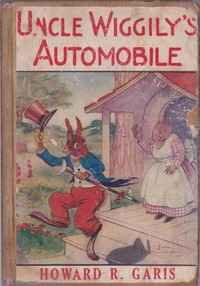
The source record for Uncle Wiggily's Automobile — Background and Themes measures this digital text at 26,927 words, 1 hr 58 min estimated reading time, and 22 detected text sections.
The text analysis averages about 15.5 words per sentence, while the detected sections provide another way to judge how the source is divided.
Project Gutenberg metadata also associates the work with “Dogs -- Juvenile fiction,” connecting these edition facts with the source record’s subject description.
Explore this collection
These alternatives are selected using recorded categories and estimated reading time.
About 121 minutes
Childrens Adventures
27,650 recorded words. 3 minutes difference from this book's estimate.
View Gutenberg source #76408About 113 minutes
Childrens Adventures
25,990 recorded words. 5 minutes difference from this book's estimate.
View Gutenberg source #36861About 125 minutes
Childrens Adventures
28,596 recorded words. 7 minutes difference from this book's estimate.
View Gutenberg source #39706Search stored excerpts and compare books → Choose by your preferences →
Choices use stored catalog measurements. Estimates vary with reading speed. A shared category is a catalog label, not a claim that two books have the same argument or literary quality.
Search reads excerpt text stored with this catalog and links to its associated Gutenberg record. The connection is stored in the site database; this tool does not recheck that every excerpt is word-for-word identical to that external record. Excerpt search does not cover every chapter and does not verify historical publication dates.
Catalog snapshot checked: 2026-09-25. Coverage: 100 public books, 100 available source excerpts.
Read the complete public-domain text at its original source.
Read on Project GutenbergThe first story introduces Uncle Wiggily Longears through a doctor visit: Dr. Possum prescribes a trip for his ailment, and the rabbit gentleman's nose 'twinkled like a star on a frosty night.' This simile, along with the detailed list of animal neighbors, establishes a cozy, anthropomorphic world where ailments have simple remedies. The opening thus signals that the automobile will be a vehicle for adventure and recovery.
The opening excerpt immediately grounds the reader in Uncle Wiggily’s character and community. Dr. Possum’s diagnosis—that Uncle Wiggily must ‘go away’—frames the automobile not as a luxury but as a medical necessity. The narrator’s aside that the rabbit’s nose ‘twinkled like a star on a frosty night’ is a characteristic Garis touch: a vivid, slightly whimsical image that personalizes the protagonist. The roll call of neighbors (the Bushytail squirrels, the Bow Wow puppies, the Wibblewobble ducks) establishes a dense social network that will reappear throughout the book. A first reader should note how these relationships create a support system; later episodes often depend on one character needing help from another.
In the middle excerpt, Jimmie Wibblewobble mistakes a strange pony for Munchie Trot and leaps onto its back, triggering a runaway ride. This episode exemplifies the book’s pattern: a small error leads to a perilous situation, resolved by Uncle Wiggily’s timely arrival in his automobile. The narration shifts between Jimmie’s panic (‘I’ll fall off!’) and the pony’s fright, with the author adding a playful uncertainty—‘Maybe he thought it was a burglar fox, but I’m not sure.’ Such asides invite the reader to imagine alternative explanations. The rescue is efficient: the auto outpaces the pony, Jimmie jumps to safety, and the pony later apologizes. This structure—trouble, chase, rescue, reconciliation—repeats across stories, making the book predictable in a comforting way.
Throughout the excerpts, Uncle Wiggily’s automobile functions as more than transportation; it is a refuge. When Jimmie lands safely in the auto, the vehicle becomes a sanctuary from danger. The rabbit gentleman’s explanation that he was delayed by ‘a hole in one of his big rubber tires’ adds a mundane mechanical detail that grounds the fantasy. This blend of everyday problems (flat tires) with extraordinary rescues (saving a duck from a runaway pony) is a hallmark of Garis’s storytelling. Readers should watch for how the auto’s reliability is tested—breakdowns or obstacles often precede the most dramatic rescues, reinforcing the idea that perseverance and resourcefulness overcome setbacks.
The excerpts reveal a clear episodic rhythm: a character encounters trouble, Uncle Wiggily appears in his auto, and the crisis resolves with a lesson or apology. The opening story establishes this template with Dr. Possum’s prescription; the middle excerpt enacts it with Jimmie’s ride. A first reader will quickly learn to anticipate the rabbit gentleman’s entrance. The book’s 22 sections suggest many such cycles. Garis varies the participants—ducks, dogs, squirrels—but the core pattern remains. This repetition is not a flaw but a structural choice that builds familiarity for young readers. The narrator’s direct addresses (‘Think of that!’) and gentle humor (the pony’s shame) soften the formula, making each iteration feel fresh.
Reading the excerpts sequentially reveals that ‘Uncle Wiggily’s Automobile’ is less a continuous narrative than a collection of linked adventures. The automobile itself is a narrative device that enables encounters and rescues. Pay attention to how Garis uses animal-specific traits—Jimmie’s wings, the pony’s speed—to create obstacles and solutions. The book rewards a reader who enjoys predictable yet inventive problem-solving.
Reading how Uncle Wiggily always found help exactly when needed, I recalled my grandfather’s steady hand on the wheel during Sunday drives. The episodic kindness in those old Garis pages felt like a warm blanket. Andiron Tales — Edition Insights stirred that same quiet reassurance, its fireside logic reminding me how small gestures carry us home.
Your answers remain private and are stored only in this browser.









