About 121 minutes
Willy's travels on the railroad — Text and Context
Childrens Adventures
27,650 recorded words. 4 minutes difference from this book's estimate.
View Gutenberg source #76408
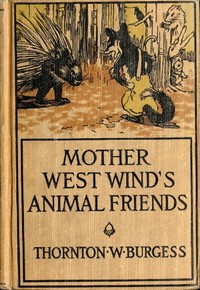
Before opening Mother West Wind's Animal Friends — Story, Setting & Ideas, the edition data offers a quick orientation: 28,596 words, 2 hr 5 min estimated reading time, and 4 detected text sections.
The text analysis averages about 14.3 words per sentence, while the detected sections provide another way to judge how the source is divided.
Project Gutenberg metadata also associates the work with “Short stories,” connecting these edition facts with the source record’s subject description.
Explore this collection
These alternatives are selected using recorded categories and estimated reading time.
About 121 minutes
Childrens Adventures
27,650 recorded words. 4 minutes difference from this book's estimate.
View Gutenberg source #76408About 132 minutes
Childrens Adventures
30,302 recorded words. 7 minutes difference from this book's estimate.
View Gutenberg source #24160About 118 minutes
Childrens Adventures
26,927 recorded words. 7 minutes difference from this book's estimate.
View Gutenberg source #60017Search stored excerpts and compare books → Choose by your preferences →
Choices use stored catalog measurements. Estimates vary with reading speed. A shared category is a catalog label, not a claim that two books have the same argument or literary quality.
Search reads excerpt text stored with this catalog and links to its associated Gutenberg record. The connection is stored in the site database; this tool does not recheck that every excerpt is word-for-word identical to that external record. Excerpt search does not cover every chapter and does not verify historical publication dates.
Catalog snapshot checked: 2026-09-25. Coverage: 100 public books, 100 available source excerpts.
Read the complete public-domain text at its original source.
Read on Project GutenbergFrom the opening chapter, Burgess establishes a distinctive narrative mechanism: the Merry Little Breezes, children of Old Mother West Wind, act as both scouts and saviors. When a fire threatens the Green Meadows, it is a Little Breeze that discovers the flames and rallies the others to spread the alarm. This recurring device—the breezes as mobile, benevolent agents—shapes the collection's structure, allowing news and danger to travel swiftly across the meadow and forest.
The stories balance peril with reassurance. In "The Fuss in the Big Pine," a warning from a Little Breeze saves Hooty the Owl from Farmer Brown's boy, while Johnny Chuck's contentment is underscored by his two back doors. Burgess's prose is direct and rhythmic, often repeating phrases like "very, very" to heighten emotion, and he punctuates episodes with a narrator's signature sign-off: "And this is all I am going to tell you."
Burgess does not merely describe the wind; he personifies it into a family of active characters. Each morning, Old Mother West Wind "tumbles them out of a great bag on to the Green Meadows," and each night she gathers them home. This daily cycle gives the stories a built-in clock and a reliable source of plot movement. The Little Breezes are the first to spot the meadow fire in Chapter I, and they carry warnings to Johnny Chuck and Hooty the Owl in later chapters. They are not passive observers but urgent messengers: they "hurried" and "panted" when delivering news. Their presence ensures that no character is truly isolated, and that information—whether about a fire or a predator—travels faster than any single animal could. This collective vigilance is a quiet moral: safety depends on community and swift communication.
The dangers in these stories are concrete and immediate. The opening fire is described with stark sensory detail: "little red flames were running through the grass in all directions," turning green to "black and ugly." Later, Johnny Chuck faces the threat of Granny and Reddy Fox, who discuss his fatness and plan to catch him. The menace is voiced aloud, making it palpable to the reader. Farmer Brown's boy appears as a recurring offstage antagonist—he has caught old Mrs. Chuck (though she escapes), and he searches the big pine for Hooty. Burgess uses these threats to generate suspense, but he also undercuts them with relief: the breezes warn in time, the back door provides escape, and the narrator often steps back with a phrase like "And this is all I am going to tell you" to close the episode on a note of finality rather than lingering fear.
Burgess's narrative voice is distinctive for its rhythmic repetitions and direct address. Phrases like "very, very big indeed" and "very, very comfortable" create a cadence that is both soothing and emphatic. The narrator frequently uses exclamations ("Yes, Sir!") and interjects with commentary on characters' emotions: Johnny Chuck is "happy because he possessed the best thing in the world, which is contentment." This explicit moralizing is part of the formula, as is the pattern of each chapter ending with a curt dismissal. The stories also rely on physical comedy—Peter Rabbit's "patch on the seat of his pants" bobbing through the grass—and on the animals' distinct voices: Reddy Fox "grinned maliciously" and "turned a somersault" while delivering bad news. These recurring techniques give the collection a consistent, recognizable texture.
Readers will notice that Burgess rarely lets a chapter end without a clear resolution or a moral tag. The Merry Little Breezes are not just helpers; they are the connective tissue of the Green Meadows, ensuring that no crisis goes unwitnessed. Pay attention to how the narrator's voice shifts between urgency and calm, and how the animals' homes—whether a burrow with two back doors or a hollow in a pine—serve as both sanctuaries and traps. The stories reward attention to small details: a patch on pants, a whispered warning, a chuckle of contentment.
That rainy afternoon, I kept returning to how the Merry Little Breezes nudged Johnny Chuck toward safety without ever lecturing him. The gentleness stayed with me. Later, nearly by accident, I picked up Mabel's mishap — A Reader’s Guide, and found the same quiet care in how its pages trace one small stumble into something kinder.
Create a short personal record of your experience with this book.









