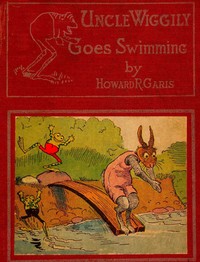
Uncle Wiggily, the bunny rabbit gentleman, hops toward a pond where Bully and Bawly No Tail, the frog boys, are diving from a springboard. Despite admitting he is not a good swimmer, he jumps in and lands head-first in the mud, crying “Blubble! Ubble! Blub!” The frog boys pull him out and suggest he stop trying to swim or dive. The catalog lists “Tricksters” as a subject, but in this opening story the frog boys act as rescuers, not tricksters.
The Catalog’s Trickster Label vs. the Frog Boys’ Role
The Project Gutenberg record assigns “Tricksters” as a subject for this book. In the excerpt, however, Bully and Bawly No Tail do not trick anyone. They invite Uncle Wiggily to swim, warn him he is not a good swimmer, and then rescue him when he gets stuck. Their dialogue is cooperative: “Quick! We must pull him out!” and “If we get him out we’ll put him on a raft.” The only possible trickster figure might be the fox mentioned in the subtitle, but the excerpt does not include the fox. Readers should note that the catalog subject may reflect the series’ broader themes rather than this specific story.
Voice and Physical Comedy in the Narrative
The story uses onomatopoeia and exaggerated physical mishaps for humor. Uncle Wiggily’s underwater cries—“Blubble! Ubble! Blub!”—and the description of his head stuck in mud create a slapstick tone. The narrator also includes asides like “hoping he would not get too much water up it” when he jumps. This blend of animal characters with human-like concerns (a rabbit worrying about water up his nose) is characteristic of Howard R. Garis’s style. The prose is simple and repetitive, suitable for early readers, with short paragraphs and direct dialogue.
Structure: Three Stories in One Volume
The title page indicates that this book contains three stories: the title story, “Uncle Wiggily Distributes Thanksgiving Cakes,” and “The Bunny Rabbit Gentleman Makes a Kite.” The excerpt only covers the beginning of the first story. The catalog’s subject “Kites” likely refers to the third story, not the swimming tale. Readers should be aware that the book is a collection, and the catalog subjects may be distributed across the three stories. The swimming story itself focuses on water, mud, and rescue, with no mention of kites or Thanksgiving.
This edition preserves the original 1919 text and illustrations by Lang Campbell. The story’s humor relies on physical comedy and animal characters with human traits. Readers may want to compare the frog boys’ helpful behavior here with other Uncle Wiggily stories where tricksters appear. The catalog subjects offer a broad overview, but each story in this volume has its own distinct focus.
That rainy afternoon, Uncle Wiggily’s soggy mishap left me smiling at how the frog boys simply helped, no tricks involved. Afterwards, I drifted to The yule log — Story, Setting & Ideas, and found that same quiet warmth—a hearth, a pause, a small kindness glowing through winter’s gloom. One book simply led to another, the way rain finds a window.