About 27 minutes
The second adventures of Uncle Wiggily — Inside the Classic
Childrens Adventures
6,145 recorded words. 0 minutes difference from this book's estimate.
View Gutenberg source #71515
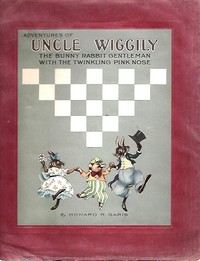
For The adventures of Uncle Wiggily, the bunny rabbit gentleman with the twinkling pink nose — Context and Discussion, the stored edition analysis reports 6,018 words, 27 min estimated reading time, and 3 detected text sections.
The text analysis averages about 14.5 words per sentence, while the detected sections provide another way to judge how the source is divided.
Project Gutenberg metadata also associates the work with “Animals -- Juvenile fiction,” connecting these edition facts with the source record’s subject description.
Explore this collection
These alternatives are selected using recorded categories and estimated reading time.
About 27 minutes
Childrens Adventures
6,145 recorded words. 0 minutes difference from this book's estimate.
View Gutenberg source #71515About 25 minutes
Childrens Adventures
5,696 recorded words. 2 minutes difference from this book's estimate.
View Gutenberg source #61735About 23 minutes
Childrens Adventures
5,076 recorded words. 4 minutes difference from this book's estimate.
View Gutenberg source #75465Search stored excerpts and compare books → Choose by your preferences →
Choices use stored catalog measurements. Estimates vary with reading speed. A shared category is a catalog label, not a claim that two books have the same argument or literary quality.
Search reads excerpt text stored with this catalog and links to its associated Gutenberg record. The connection is stored in the site database; this tool does not recheck that every excerpt is word-for-word identical to that external record. Excerpt search does not cover every chapter and does not verify historical publication dates.
Catalog snapshot checked: 2026-09-25. Coverage: 100 public books, 100 available source excerpts.
Read the complete public-domain text at its original source.
Read on Project GutenbergThe story begins with Uncle Wiggily announcing a trip to the woods, and Nurse Jane insisting on accompanying him for safety. Their picnic is interrupted by two bear cubs, Goopy and Snoopy, who try to scare them by dropping acorns from a branch. The plan backfires when Goopy falls into a pitcher of lemonade, splashing the bunny and muskrat. Uncle Wiggily responds by fetching sticky fly paper to catch any more bears. This opening establishes the pattern of mild peril, quick thinking, and humorous resolution that defines the book.
The text relies on repeated phrases and rhythmic patterns that make it easy to read aloud. For example, Uncle Wiggily’s full title—“the bunny rabbit gentleman with the twinkling pink nose”—appears in the title and is echoed in the narrative. Characters often repeat each other’s names or exclamations, such as “Oh, dear!” and “Wowzie Zow!” These repetitions create a predictable cadence that supports early readers. The author also uses formulaic transitions like “Now, the stump table had been set in the woods by a Mother Bear and her two little cubs” to shift scenes without breaking the flow.
Lang Campbell’s illustrations are integrated into the text, with captions like “UNCLE WIGGILY HOPPED HOME TO HIS BUNGALOW” appearing directly under pictures. These captions often repeat or slightly rephrase the surrounding prose, reinforcing key actions. The images depict the characters in expressive poses—Uncle Wiggily with his pink nose, Nurse Jane with her tail twisted under her dress—and show the action sequences, such as Goopy climbing a tree or the alligator pulling the boat. The visual humor, like the hippo sneezing after biting the alligator, complements the text’s slapstick.
Each adventure is self-contained but linked by recurring characters and settings. The excerpt ends with a clear conclusion—“this is the end of the story. But there will be more stories in another book like this”—which signals the episodic nature. Within the story, tension builds through simple cliffhangers: the bear cubs’ plan, the alligator towing the boat toward the hippo’s mouth. These are resolved quickly, often by a clever action from Uncle Wiggily or Nurse Jane, such as cutting the rope with a hatchet. The pacing keeps young readers engaged without prolonged suspense.
Uncle Wiggily is the proactive hero, while Nurse Jane provides caution and practical help. Their dialogue follows a pattern: Nurse Jane asks a question or expresses fear, and Uncle Wiggily reassures her or proposes a solution. For instance, when Nurse Jane asks about the lemonade, Uncle Wiggily suggests it might belong to a giant. Later, she brings the hatchet and urges him to cut the rope. The animal characters, like the bear cubs and the alligator, are given distinct voices through their names (Goopy, Snoopy) and exclamations (“Wowzie Zow!”). This clear differentiation helps children follow the story.
Readers will notice that the book’s language and structure are designed for oral reading, with many opportunities for expressive voices and sound effects. The short chapters and repetitive elements make it suitable for beginning readers or as a read-aloud. Pay attention to how the illustrations and text work together to tell the story—the pictures often show what the words describe, reinforcing comprehension. This edition preserves the original 1924 publication, including the period-specific details like “sticky fly paper” and “kindling wood.”
Years of shelving these things and I still find myself smiling when Uncle Wiggily outwits a grumpy bear with sheer politeness—that quiet triumph of gentleness over noise. It reminds me of another tale, Mabel's mishap — A Reader’s Guide, where a small stumble becomes its own soft lesson in patience. Different stories, same steady heartbeat.
Save your reaction, strongest insight, and memorable passage.









