About 120 minutes
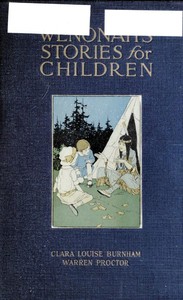
Wenonah's Stories for Children — Themes and Context
School Stories
27,573 recorded words. 0 minutes difference from this book's estimate.
View Gutenberg source #51653

The source record for A Collection of Beatrix Potter Stories — Themes and Context measures this digital text at 27,530 words, 2 hr estimated reading time, and 3 detected text sections.
The text analysis averages about 14.3 words per sentence, while the detected sections provide another way to judge how the source is divided.
Project Gutenberg metadata also associates the work with “Short stories,” connecting these edition facts with the source record’s subject description.
Explore this collection
These alternatives are selected using recorded categories and estimated reading time.
About 120 minutes
School Stories
27,573 recorded words. 0 minutes difference from this book's estimate.
View Gutenberg source #51653About 134 minutes
School Stories
30,787 recorded words. 14 minutes difference from this book's estimate.
View Gutenberg source #2606About 135 minutes
School Stories
30,900 recorded words. 15 minutes difference from this book's estimate.
View Gutenberg source #928Search stored excerpts and compare books → Choose by your preferences →
Choices use stored catalog measurements. Estimates vary with reading speed. A shared category is a catalog label, not a claim that two books have the same argument or literary quality.
Search reads excerpt text stored with this catalog and links to its associated Gutenberg record. The connection is stored in the site database; this tool does not recheck that every excerpt is word-for-word identical to that external record. Excerpt search does not cover every chapter and does not verify historical publication dates.
Catalog snapshot checked: 2026-09-25. Coverage: 100 public books, 100 available source excerpts.
Read the complete public-domain text at its original source.
Read on Project GutenbergBeatrix Potter’s stories are built on a rhythm of small disasters and narrow escapes. In The Tale of Peter Rabbit, the hero loses his shoes and jacket in Mr. McGregor’s garden, then squeezes under a gate to flee. The Tale of Mr. Jeremy Fisher follows a frog whose fishing expedition ends with a trout swallowing him—macintosh and all—only to spit him out. These episodes share a pattern: a protagonist ventures into a seemingly safe space, encounters a larger creature, and sheds an item of clothing or equipment before retreating. The stories move briskly between indoor and outdoor settings, often using a single sentence to shift from a cozy burrow to a threatening field.
Clothing functions as both protection and liability across the collection. Peter Rabbit’s blue jacket with brass buttons catches on a gooseberry net, nearly trapping him. Miss Moppet ties a mouse in a duster, but the mouse escapes through a hole. Mr. Jeremy Fisher’s macintosh saves him from being digested by a trout. These garments are not mere decoration; they are plot devices that create or resolve peril. Containers also appear repeatedly: Peter hides in a watering can, Mr. Jeremy’s boat is a lily-leaf, and the mouse in “The Story of Miss Moppet” slides down a bell-pull. The stories often hinge on whether a character can get into or out of a confined space.
Potter establishes clear boundaries between domestic safety and wild danger. Peter’s mother warns him away from Mr. McGregor’s garden, but he crosses the boundary and is chased. Mr. Jeremy Fisher leaves his damp house for the pond, where he is attacked by a stickleback and a trout. The mouse in “Miss Moppet” descends from the cupboard to the floor, entering the cat’s territory. Each story uses a journey—often a short one—to trigger the central conflict. The settings are described in precise, sensory detail: the “slippy-sloppy” water in Mr. Jeremy’s larder, the sand-bank under the fir tree where the rabbits live. These details ground the fantasy in a recognizable natural world.
Potter’s narrator maintains a calm, slightly amused tone even during crises. When Peter is caught in the gooseberry net, the text notes that his jacket was “quite new.” After Mr. Jeremy Fisher is swallowed, the story continues without dwelling on the trauma: “But the trout was so displeased with the taste of the macintosh, that in less than half a minute it spat him out again.” The humor arises from deadpan understatement and the contrast between the characters’ earnest efforts and their absurd predicaments. The narrator also addresses the reader directly at times, as when Miss Moppet’s teasing is described as “not at all nice.” This voice creates intimacy without sentimentality.
Each story follows a similar arc: a character sets out, encounters trouble, loses something, and returns home (or escapes). Yet Potter varies the details. Peter loses his shoes and jacket; Mr. Jeremy loses his fishing catch and nearly his life; the mouse loses his freedom but regains it. The repetition of motifs—lost clothing, narrow escapes, animal antagonists—gives the collection coherence, while the variations keep each tale fresh. The stories are short, often ending abruptly after the climax, with no moralizing. This structure suits the intended audience, allowing for quick, satisfying reads that reward attention to pattern.
Readers may find it useful to compare how different animals in this collection respond to danger. Peter panics; Mr. Jeremy Fisher remains methodical; the mouse outwits his captor. Noticing these differences enriches the experience of moving from one story to the next. The collection rewards attention to small details—the type of food eaten, the color of a coat, the shape of a boat—that Potter uses to build distinct, memorable worlds.
I keep thinking about how Beatrix Potter’s animals always tiptoe past danger with their tiny clothes intact, that quiet menace so softly drawn. It reminded me of another old friend, Louisa May Alcott’s gentle stories, where simple kindnesses linger like afternoon light. A Garland for Girls — Story, Setting & Ideas holds that same unhurried warmth, a small world you don’t want to leave.
Use these questions to collect your thoughts before moving on.