About 328 minutes
A Garland for Girls — Story, Setting & Ideas
School Stories
75,399 recorded words. 215 minutes difference from this book's estimate.
View Gutenberg source #5830
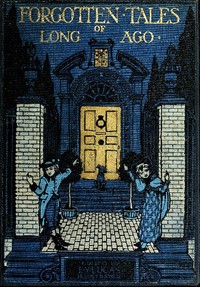
For Forgotten Tales of Long Ago — Inside the Classic, the stored edition analysis reports 124,776 words, 9 hr 3 min estimated reading time, and 15 detected text sections.
The text analysis averages about 22.6 words per sentence, while the detected sections provide another way to judge how the source is divided.
Project Gutenberg metadata also associates the work with “Conduct of life -- Juvenile fiction,” connecting these edition facts with the source record’s subject description.
Explore this collection
These alternatives are selected using recorded categories and estimated reading time.
About 328 minutes
School Stories
75,399 recorded words. 215 minutes difference from this book's estimate.
View Gutenberg source #5830About 151 minutes
School Stories
34,684 recorded words. 392 minutes difference from this book's estimate.
View Gutenberg source #34971About 139 minutes
School Stories
31,905 recorded words. 404 minutes difference from this book's estimate.
View Gutenberg source #572Search stored excerpts and compare books → Choose by your preferences →
Choices use stored catalog measurements. Estimates vary with reading speed. A shared category is a catalog label, not a claim that two books have the same argument or literary quality.
Search reads excerpt text stored with this catalog and links to its associated Gutenberg record. The connection is stored in the site database; this tool does not recheck that every excerpt is word-for-word identical to that external record. Excerpt search does not cover every chapter and does not verify historical publication dates.
Catalog snapshot checked: 2026-09-25. Coverage: 100 public books, 100 available source excerpts.
Read the complete public-domain text at its original source.
Read on Project GutenbergE. V. Lucas's Forgotten Tales of Long Ago gathers twenty stories originally published between roughly 1790 and 1830, a period when children's literature was dominated by moral instruction. In his preface, Lucas candidly notes that the authors 'preferred teaching to entertaining, moral improvement to drama,' and he hopes the selection will be found interesting despite this tendency. The collection includes tales from obscure sources such as The Satchel; or, Amusing Tales for Correcting Rising Errors in Early Youth (1805) and Tales from the Mountains (1814). Lucas points out specific details that help date the stories, such as the sentence 'The boy's father, though a labouring man, had a generous mind,' which reflects the degraded role of the poor in minor English literature of the time.
The first story, 'Dicky Random,' from The Satchel, features a father who is 'hardly less foolish than his son,' an unusual characterization in these didactic works. Lucas also notes the courage of naming a doctor 'Hardheart,' a blunt moral label. The story includes 'pleasing incidents,' such as 'the irreproachable behaviour of the gentlemen at dinner,' suggesting that social decorum was a key lesson. Lucas's commentary reveals his awareness of the period's conventions and his appreciation for deviations from them.
In one excerpt, two boys, Hal and Ben, visit a cathedral with their uncle. Hal is preoccupied with getting a uniform, while Ben notices the 'coloured shadows on the floor and walls' from stained glass. Their uncle explains Gothic arches and the lost art of painting on glass. A robin perched on the organ is fed by a young man with a black patch over his eye, who lost his sight from a stone while passing under rocks at Clifton. The robin, once tame, now does not recognize him. The scene shifts to the young man's hovel, where his paralyzed mother and four pale siblings work sticking pins in paper. The contrast between Hal's impatience and Ben's curiosity, and between the cathedral's beauty and the family's poverty, is striking.
Lucas includes 'The Months' from Tales from the Mountains as a 'little work of pretty fancy' that compensates for lack of drama with ingenuity. He suggests reading the descriptions aloud in irregular order and asking children to identify each month, encouraging thought and observation. Another story, 'The Spotted Cow and the Pianoforte,' has a promising title but disappointing content, being a variation on a very old theme. Lucas's editorial choices highlight his interest in stories that teach through observation and contrast rather than overt moralizing, and his willingness to include pieces that are more fanciful than dramatic.
Readers approaching Forgotten Tales of Long Ago should attend to the editorial voice of E. V. Lucas, who guides us through these early stories with wry commentary and historical context. The collection rewards those who notice the small, telling details—a doctor's name, a robin's loyalty, a father's foolishness—that reveal the values and tensions of a bygone era. Lucas's selection invites us to see both the limitations and the unexpected charms of these didactic tales.
Reading how those old tales let a boy ponder colored shadows made me recall sitting with Forgotten Tales as a child, but it was A Garland for Girls — Story, Setting & Ideas that first taught me quiet wonder—not for a lesson, just for the strange, private pleasure of noticing something small shift under the light, the way the robin’s loyalty lingered long after the page closed.
Save your reaction, strongest insight, and memorable passage.