About 134 minutes
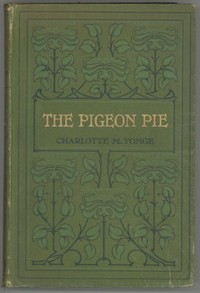
The Pigeon Pie — Key Ideas to Explore
School Stories
30,787 recorded words. 1 minutes difference from this book's estimate.
View Gutenberg source #2606
For Alice's Adventures in Wonderland HTML Edition — Context and Discussion, the stored edition analysis reports 30,900 words, 2 hr 15 min estimated reading time, and 3 detected text sections.
The text analysis averages about 18.6 words per sentence, while the detected sections provide another way to judge how the source is divided.
Project Gutenberg metadata also associates the work with “Fantasy fiction,” connecting these edition facts with the source record’s subject description.
Explore this collection
These alternatives are selected using recorded categories and estimated reading time.
About 134 minutes
School Stories
30,787 recorded words. 1 minutes difference from this book's estimate.
View Gutenberg source #2606About 139 minutes
School Stories
31,905 recorded words. 4 minutes difference from this book's estimate.
View Gutenberg source #572About 120 minutes
School Stories
27,530 recorded words. 15 minutes difference from this book's estimate.
View Gutenberg source #582Search stored excerpts and compare books → Choose by your preferences →
Choices use stored catalog measurements. Estimates vary with reading speed. A shared category is a catalog label, not a claim that two books have the same argument or literary quality.
Search reads excerpt text stored with this catalog and links to its associated Gutenberg record. The connection is stored in the site database; this tool does not recheck that every excerpt is word-for-word identical to that external record. Excerpt search does not cover every chapter and does not verify historical publication dates.
Catalog snapshot checked: 2026-09-25. Coverage: 100 public books, 100 available source excerpts.
Read the complete public-domain text at its original source.
Read on Project GutenbergThe opening of Alice's Adventures in Wonderland establishes a distinctive narrative voice that oscillates between Alice's earnest, logical mind and the deadpan absurdity of the world she enters. From the very first paragraph, Carroll sets up a tension between ordinary boredom and extraordinary events: Alice is tired of having nothing to do, yet when a rabbit with a waistcoat-pocket and a watch appears, she follows without hesitation. The narrator's aside—"when she thought it over afterwards, it occurred to her that she ought to have wondered at this, but at the time it all seemed quite natural"—captures the story's central dynamic: Alice's rational attempts to make sense of a world that consistently defies logic.
The excerpt from the Mad Tea Party illustrates how Carroll constructs nonsense through rigorous, if misapplied, logic. When the Dormouse tells of three sisters who lived on treacle, Alice objects on practical grounds: "They couldn't have done that, you know; they'd have been ill." The Dormouse calmly replies, "So they were; very ill." This exchange shows that Wonderland's absurdity is not random but follows its own internal rules—rules that Alice, with her schoolroom learning, keeps trying to correct. The Hatter's quibble about "taking more" versus "taking less" further demonstrates how language itself becomes a playground for twisted reasoning. Carroll's humor relies on the reader recognizing the gap between conventional sense and the characters' relentless, literal-minded application of faulty premises.
Alice's character emerges through her reactions: she is curious, polite, but increasingly frustrated. During the tea party, she "always took a great interest in questions of eating and drinking," a detail that grounds her in bodily, practical concerns. Yet she also shows a capacity for self-correction, as when she humbly says, "I won't interrupt again. I dare say there may be one." Her voice is distinct from the other characters—more measured, more aware of social niceties—which makes her clashes with the Hatter and March Hare all the more pointed. The narrative often reports her thoughts in indirect speech, creating a sense of intimacy with her perspective while maintaining the narrator's dry commentary. This dual layer allows readers to both share Alice's confusion and appreciate the absurdity from a slight distance.
The fall down the rabbit-hole introduces a pattern of descent and disorientation that recurs throughout the excerpts. Alice's fall is described with a mix of physical detail and fantastical elements: she passes cupboards and bookshelves, takes down a jar of orange marmalade, and worries about killing someone below. The fall is both literal and metaphorical, plunging her into a world where scale is unstable—she grows and shrinks later in the story. The well itself, with its shelves and maps, suggests a space that is domestic yet impossible. This blending of the familiar (marmalade, cupboards) with the surreal (a talking rabbit, a fall that lasts miles) creates a consistent texture. Carroll's attention to concrete details—the empty jar, the watch, the daisy-chain—anchors the fantasy, making the absurdity feel tangible.
Readers approaching this edition should attend to the interplay between Alice's internal reasoning and the external chaos she encounters. The narrative rewards close attention to wordplay and logical missteps, as Carroll often embeds jokes in the structure of dialogue rather than in overt commentary. The excerpts suggest that the story's pleasure lies not in a coherent plot but in the moment-by-moment negotiation between a sensible girl and a world that refuses to make sense.
I remember first losing myself in Carroll’s peculiar logic as a child, feeling the world tilt with each deadpan absurdity. That same quiet dizziness returned years later, reading The Pigeon Pie — Key Ideas to Explore, where ordinary rules bend without warning, leaving me to savor the strangeness rather than solve it.
Create a short personal record of your experience with this book.