About 135 minutes
Alice's Adventures in Wonderland HTML Edition — Context and Discussion
School Stories
30,900 recorded words. 1 minutes difference from this book's estimate.
View Gutenberg source #928
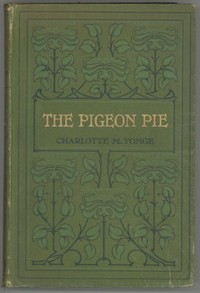
The Pigeon Pie — Key Ideas to Explore can be approached with a clearer sense of reading commitment from its source measurements: 30,787 words, 2 hr 14 min estimated reading time, and 3 detected text sections.
The text analysis averages about 19.9 words per sentence, while the detected sections provide another way to judge how the source is divided.
Project Gutenberg metadata also associates the work with “Children's stories, English -- 19th century,” connecting these edition facts with the source record’s subject description.
Explore this collection
These alternatives are selected using recorded categories and estimated reading time.
About 135 minutes
School Stories
30,900 recorded words. 1 minutes difference from this book's estimate.
View Gutenberg source #928About 139 minutes
School Stories
31,905 recorded words. 5 minutes difference from this book's estimate.
View Gutenberg source #572About 120 minutes
School Stories
27,530 recorded words. 14 minutes difference from this book's estimate.
View Gutenberg source #582Search stored excerpts and compare books → Choose by your preferences →
Choices use stored catalog measurements. Estimates vary with reading speed. A shared category is a catalog label, not a claim that two books have the same argument or literary quality.
Search reads excerpt text stored with this catalog and links to its associated Gutenberg record. The connection is stored in the site database; this tool does not recheck that every excerpt is word-for-word identical to that external record. Excerpt search does not cover every chapter and does not verify historical publication dates.
Catalog snapshot checked: 2026-09-25. Coverage: 100 public books, 100 available source excerpts.
Read the complete public-domain text at its original source.
Read on Project GutenbergThe story opens in the dining-hall of Forest Lea House, where the September sun shines through a bay-window with broken, unmended glass. The room is furnished with dark oak wainscoting, stag's antlers, and a long table set with trenchers, drinking-horns, and a leather black-jack. A six-year-old boy rides a bench with a rush bridle, calling his sisters to join him in a game of riding to Worcester to see King Charles and brother Edmund. The children's play is interrupted by Deborah, a sharp-tongued servant in a pinched waist and scarlet stockings, who scolds them for making a racket while battles may be raging.
Yonge establishes character through voice and physical description. Deborah's speech is sharp and shrill: she chides the children for their racket and later accuses Mistress Rose of hiding a pigeon in her lap at midnight. Her loyalty is undercut by her temper and her foolish trust in Diggory, a sullen, selfish fellow. The narrative voice shifts between the children's perspective and an omniscient commentary that judges Deborah's weakness. The setting is rendered with precise domestic detail: the broken window, the vine trailing across it, the polished oak floor, and the leather black-jack all ground the story in a specific, lived-in space.
The pacing accelerates through the threat of betrayal. Diggory, after fleeing in panic, invents a story about seeing brains to excuse his cowardice. He then contemplates the reward for capturing fugitive cavaliers, weighing his loyalty against the chance to rent a farm. His internal monologue shifts from self-justification to greed: “Diggory Stokes, you’re a made man!” he concludes, throwing down his bill-hook. The narrative cuts to Lucy's unwitting role in his betrayal, then to a loud knocking at the door that interrupts a quiet evening. The tension is built through short, action-driven sentences and the contrast between the children's innocence and Diggory's calculating thoughts.
Yonge moves between multiple viewpoints: the children's game, Deborah's bustling, Diggory's scheming, and the household's collective anxiety. The excerpt from Chapter VI shows a sudden shift from domestic calm—Walter bringing trout, the children admiring them—to a loud, authoritative knocking. The narrative voice becomes more urgent, with exclamations and fragmented dialogue. This technique mirrors the uncertainty of the Civil War setting, where peace can be shattered at any moment. The pigeon pie itself, saved from the meal and hidden, becomes a symbol of the secret that drives the plot, though the full significance is only hinted at in these excerpts.
Readers should attend to how Yonge uses objects—the broken window, the leather pitcher, the hidden pie—to signal vulnerability and secrecy. The narrative's shifts between playful domestic scenes and moments of threat create a rhythm that mirrors the household's precarious position. The excerpts leave the outcome of Diggory's betrayal and the identity of the fugitive unresolved, inviting attention to how Yonge balances historical tension with a child's perspective.
There’s a particular ache in The Pigeon Pie—the children’s games brushing against real danger, the secret held tight in a warm kitchen. It reminds me of how Alice’s own curious wanderings feel both playful and slightly off-kilter, safe and not. I keep thinking about that leather black-jack, and how wonder works best when it’s quietly threatened. Speaking of which, here’s Alice's Adventures in Wonderland HTML Edition — Context and Discussion for another kind of hiding.
Create a short personal record of your experience with this book.