About 216 minutes
Early candlelight stories — Story, Setting & Ideas
Young Readers
49,608 recorded words. 6 minutes difference from this book's estimate.
View Gutenberg source #68151
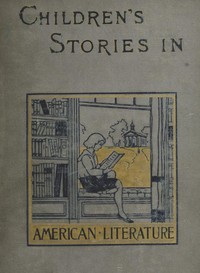
Children's Stories in American Literature, 1660-1860 — Reading Companion can be approached with a clearer sense of reading commitment from its source measurements: 48,204 words, 3 hr 30 min estimated reading time, and 6 detected text sections.
The text analysis averages about 29.9 words per sentence, while the detected sections provide another way to judge how the source is divided.
Project Gutenberg metadata also associates the work with “American literature -- History and criticism,” connecting these edition facts with the source record’s subject description.
Explore this collection
These alternatives are selected using recorded categories and estimated reading time.
About 216 minutes
Young Readers
49,608 recorded words. 6 minutes difference from this book's estimate.
View Gutenberg source #68151About 202 minutes
Young Readers
46,415 recorded words. 8 minutes difference from this book's estimate.
View Gutenberg source #60581About 225 minutes
Young Readers
51,551 recorded words. 15 minutes difference from this book's estimate.
View Gutenberg source #12735Search stored excerpts and compare books → Choose by your preferences →
Choices use stored catalog measurements. Estimates vary with reading speed. A shared category is a catalog label, not a claim that two books have the same argument or literary quality.
Search reads excerpt text stored with this catalog and links to its associated Gutenberg record. The connection is stored in the site database; this tool does not recheck that every excerpt is word-for-word identical to that external record. Excerpt search does not cover every chapter and does not verify historical publication dates.
Catalog snapshot checked: 2026-09-25. Coverage: 100 public books, 100 available source excerpts.
Read the complete public-domain text at its original source.
Read on Project GutenbergHenrietta Christian Wright's Children's Stories in American Literature, 1660-1860 (1895) opens not with a literary text but with a scene of missionary reading: a "noble-looking man" telling the story of Christ to Indian children in their own language, the first printed in that tongue. This choice signals a book more interested in moral exemplars and national progress than in literary craft. The catalog subjects promise criticism and history of children's literature, but the excerpts reveal a biographical series where authors are praised for character and public service as much as for their writing.
The chapter on George Bancroft, for instance, devotes far more space to his role as Secretary of the Navy—establishing the Naval Academy, ordering General Taylor to the Texas border—than to his ten-volume History of the United States. Wright notes that Bancroft "brought to his history a mind fresh to literary labor," but the discussion of the history itself is compressed into a single paragraph praising its "brilliant as well as faithful picture." This pattern recurs: authors are introduced through their lives, their works summarized in broad, admiring terms. The result is a book that tells about literature rather than examining it.
The catalog lists "Children's stories, American -- History and criticism" as a subject, yet the excerpts contain no analysis of children's stories as a genre. Wright does not discuss plot, character, or audience in any sustained way. Instead, she treats her subjects as cultural heroes: Audubon the naturalist, Irving the gentle humorist, Cooper the creator of the American novel. The only children mentioned are the Indian listeners in the opening anecdote. The book's title promises stories for children, but its content is stories about authors, told in a simplified style.
Wright's narrative is deeply patriotic. Bancroft's history is praised for making "the picturesque figure of Columbus fronting undismayed the terrors of that unknown sea" into a story "more marvellous than any imaginations of fairy lore." The Mexican-American War is presented as a natural consequence of defending Texas. The book's structure—from early colonial writings to the mid-nineteenth century—traces a line of moral and territorial expansion. Literature is valued for its role in this progress, not for its aesthetic qualities. Readers should expect a work of national celebration rather than literary criticism.
Wright's book is best approached as a period piece: a late-nineteenth-century educator's attempt to make American literary history palatable to young readers. Its value lies less in critical insight than in what it reveals about the era's cultural priorities—heroic biography, moral instruction, and national pride. Readers interested in the actual texts of early American children's literature will need to look elsewhere, but those curious about how literary history was once packaged for the young will find a revealing example.
When I turn the brittle pages of Wright's old survey, I recall how biography forever overtakes analysis—a life, not a text, becomes the story. That patient fondness for the child beneath the author reminds me of another gentle cataloguing of small souls, where every frock and tantrum holds quiet meaning, as in Little Pitchers Flaxie Frizzle Stories — Inside the Classic. Both books simply watch, and remember.
Capture what you thought, learned, and would like to remember.