About 210 minutes
Children's Stories in American Literature, 1660-1860 — Reading Companion
Young Readers
48,204 recorded words. 6 minutes difference from this book's estimate.
View Gutenberg source #32172
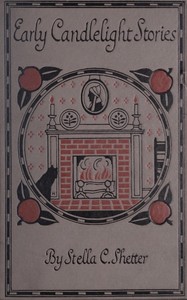
Early candlelight stories — Story, Setting & Ideas can be approached with a clearer sense of reading commitment from its source measurements: 49,608 words, 3 hr 36 min estimated reading time, and 34 detected text sections.
The text analysis averages about 17.4 words per sentence, while the detected sections provide another way to judge how the source is divided.
Project Gutenberg metadata also associates the work with “Children's stories,” connecting these edition facts with the source record’s subject description.
Explore this collection
These alternatives are selected using recorded categories and estimated reading time.
About 210 minutes
Young Readers
48,204 recorded words. 6 minutes difference from this book's estimate.
View Gutenberg source #32172About 225 minutes
Young Readers
51,551 recorded words. 9 minutes difference from this book's estimate.
View Gutenberg source #12735About 202 minutes
Young Readers
46,415 recorded words. 14 minutes difference from this book's estimate.
View Gutenberg source #60581Search stored excerpts and compare books → Choose by your preferences →
Choices use stored catalog measurements. Estimates vary with reading speed. A shared category is a catalog label, not a claim that two books have the same argument or literary quality.
Search reads excerpt text stored with this catalog and links to its associated Gutenberg record. The connection is stored in the site database; this tool does not recheck that every excerpt is word-for-word identical to that external record. Excerpt search does not cover every chapter and does not verify historical publication dates.
Catalog snapshot checked: 2026-09-25. Coverage: 100 public books, 100 available source excerpts.
Read the complete public-domain text at its original source.
Read on Project GutenbergStella C. Shetter’s Early Candlelight Stories opens with a striking structural device: Grandma arrives for the winter and immediately remakes the guest room, replacing a blue rug and wicker chairs with a rag carpet, a feather tick, patchwork cushions, and blooming geraniums. This transformation signals that the stories she will tell are not merely nostalgic but physically recreated, turning the room into a stage for the past. The three listeners—Bobby, Alice, and Pink—draw their stools closer, and the frame is set for a series of 34 tales drawn from Grandma’s own childhood. The book thus moves between two settings: the transformed present and the remembered past, with each story introduced by the children’s eager anticipation.
The opening chapter establishes a pattern that recurs throughout the book: the children gather at seven o’clock, Grandma begins, and the story unfolds. This ritual is reinforced by the physical details of the room—the rag carpet, the handmade coverlet, the canary in a gilt cage, the gray cat asleep on a braided rug. These objects are not merely decorative; they are the props of memory. When Grandma tells a story about a sugar camp or a bee tree, the children are already surrounded by the textures of pioneer life. The frame thus becomes a recurring image of transition, where the modern world is temporarily set aside, and the candlelight (as the title suggests) illuminates a different time.
Shetter often moves her characters abruptly from one setting to another, using weather or travel as a hinge. In the excerpt about sister Belle’s school, the narrative shifts from the scrubbed schoolhouse to a snowy December morning when Joe Slater’s seat is empty. The knock on the door brings a new character—the county superintendent—who has been misdirected by a boy on a sled. This movement is typical: a domestic scene (cleaning the school) gives way to a journey (Joe’s sled trip), which then introduces an outsider. The effect is to keep the reader alert to the way rural life is punctuated by unexpected arrivals and departures, often tied to the seasons.
The book includes a vocabulary list at the end, but even within the stories, Shetter lingers on specific terms that anchor the tales in a particular material culture. Words like “infare,” “barring out,” and “soft soap” appear without explanation, assuming a reader who either knows them or will infer from context. In the schoolhouse scene, the children bring “brooms and buckets, window cloths and scrubbing brushes and a can of soft soap.” Such lists are not mere decoration; they function as a kind of inventory of pioneer resources. The repeated attention to tools, fabrics, and foods—geraniums, feather ticks, rag carpets—creates a world where objects carry memory and meaning.
Though the frame is third-person, Grandma’s stories are told in first-person, as she recalls her own childhood. This shift in voice is crucial: the reader hears the children’s reactions (“Bobby and Alice and Pink drew their stools closer”) but then enters Grandma’s memory directly. In the school story, the first-person “we” includes Belle, Aggie, Truman, Charlie, and the narrator, creating a sense of shared experience. The effect is that the book becomes a layered narrative: a grandmother speaking to her grandchildren, but also a child speaking to the reader. This double voice allows Shetter to present historical details without didacticism, embedding them in the natural flow of recollection.
Readers who attend to the book’s structure will notice how each story is framed by the children’s presence, yet the frame itself grows thinner as the tales accumulate. The candlelight of the title is both literal—the light by which Grandma tells her stories—and metaphorical, illuminating a vanished way of life. Pay attention to the objects that recur: the rag carpet, the feather bed, the schoolhouse stove. They are not just props but anchors for memory, and Shetter uses them to build a world that feels both distant and intimately known.
What stayed with me about Early Candlelight Stories wasn’t just the warmth of Grandma’s voice, but how a simple room could become a whole world. It reminded me of the quiet patience in Children's Stories in American Literature, 1660-1860 — Reading Companion, where old tales feel like they’re waiting for someone to sit down and listen close. I think you’d find that same hush there.
Build a private reading journal entry for this title.