About 190 minutes
The Nest in the Honeysuckles, and other Stories — A Reader’s Guide
Young Readers
43,508 recorded words. 60 minutes difference from this book's estimate.
View Gutenberg source #16185
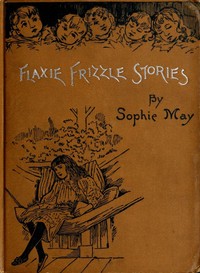
For Little Pitchers Flaxie Frizzle Stories — Inside the Classic, the stored edition analysis reports 29,841 words, 2 hr 10 min estimated reading time, and 4 detected text sections.
The text analysis averages about 14.9 words per sentence, while the detected sections provide another way to judge how the source is divided.
Project Gutenberg metadata also associates the work with “Christian life -- Juvenile fiction,” connecting these edition facts with the source record’s subject description.
Explore this collection
These alternatives are selected using recorded categories and estimated reading time.
About 190 minutes
Young Readers
43,508 recorded words. 60 minutes difference from this book's estimate.
View Gutenberg source #16185About 192 minutes
Young Readers
44,052 recorded words. 62 minutes difference from this book's estimate.
View Gutenberg source #70977About 67 minutes
Young Readers
15,257 recorded words. 63 minutes difference from this book's estimate.
View Gutenberg source #6914Search stored excerpts and compare books → Choose by your preferences →
Choices use stored catalog measurements. Estimates vary with reading speed. A shared category is a catalog label, not a claim that two books have the same argument or literary quality.
Search reads excerpt text stored with this catalog and links to its associated Gutenberg record. The connection is stored in the site database; this tool does not recheck that every excerpt is word-for-word identical to that external record. Excerpt search does not cover every chapter and does not verify historical publication dates.
Catalog snapshot checked: 2026-09-25. Coverage: 100 public books, 100 available source excerpts.
Read the complete public-domain text at its original source.
Read on Project GutenbergThe twins Pollio and Posy Pitcher, youngest of seven children, are introduced in a household where the family Bible records their full names as Napoleon Bonaparte Pitcher and a name beginning with J. The story opens with a precise setting: Rosewood, a town on a riverbank, described as so flat that the country looks “nearly as flat as a table.” This geographical detail anchors the twins' world, which is defined by domestic routines and small adventures. The narrative voice is direct and observational, noting that the twins are four years old “when our story begins,” a phrase that signals the episodic, time-bound nature of the chapters.
The structure of Little Pitchers alternates between domestic interiors and communal spaces, particularly the schoolhouse. Chapter II, “Going to School,” marks a shift from the family parlor to the classroom, where the twins encounter new rules and social dynamics. The school setting is not merely a backdrop but a stage for testing behavior: Pollio’s impulsiveness and Posy’s cautiousness are highlighted through their interactions with teachers and peers. Later chapters, such as “The Finny-Castics,” return to home-based mischief, creating a rhythm of expansion and contraction. This back-and-forth movement mirrors the twins’ developmental journey, as they learn to navigate both familial expectations and external authority.
A striking motif is physical impairment and its aftermath. Pollio’s period of crawling “on all-fours” after an injury is referenced repeatedly, even after he regains full mobility. The text notes that his lameness “had done him a little good,” making him more obedient and considerate. This image is mirrored in the character of Hop-clover, a girl who will “never, never, be able to walk without limping.” The parallel between Pollio’s temporary disability and Hop-clover’s permanent condition underscores a theme of empathy. The narrative uses these physical details not as plot devices but as recurring touchstones for moral growth, linking bodily experience to inner change.
May builds character through minute actions rather than grand pronouncements. When Posy asks for “the worst tobacco” to cure her father’s smoking, the gesture is both naive and earnest. The judge’s response—contemplating quitting for Posy’s sake—is conveyed through a series of small exchanges: a whispered conversation, a kiss, a promise of “five hundred million thousand” kisses. Similarly, Pollio’s thoughtfulness toward Hop-clover is shown through his care for her limp, not through explicit moralizing. These details accumulate to form a portrait of childhood morality rooted in everyday choices. The narrative trusts readers to infer significance from such moments, avoiding heavy-handed lessons.
Supporting figures like Hop-clover, Miss Rounds, and Nunky serve as mirrors or catalysts for the twins’ development. Hop-clover’s resilience—despite an absent mother and an unreliable father—contrasts with the Pitchers’ stable home, yet her faith (“God will take care o’ me”) influences Posy’s own moral reasoning. Miss Rounds, the “little woman” with a humpback, is a figure of community wisdom, her laughter at Posy’s tobacco request prompting the judge’s reflection. Nunky, mentioned as a recipient of Posy’s kisses, represents an alternative model of adult behavior. These characters are not fully developed but function as touchstones, their brief appearances leaving traces that shape the twins’ evolving perspectives.
Readers attentive to the interplay of setting and symbol will find that May’s Rosewood is a carefully constructed microcosm, where a riverbank, a schoolroom, and a store become stages for moral experimentation. The twins’ world is small but not simplistic; its lessons emerge from concrete details—a mallet used as a crutch, a meerschaum pipe set aside. Approach this book as a series of vignettes rather than a continuous plot, and notice how each chapter refines the twins’ characters through repetition and variation of key images.
My grandmother’s cane rested against the porch rail, much like Pollio’s quiet lameness in Little Pitchers—a small, constant presence that shaped how we moved through our days. Reading about those twins made me think of that old book from my childhood shelf, The Nest in the Honeysuckles, and other Stories — A Reader’s Guide, which held the same gentle patience for small gestures. Both simply watched children become themselves.
Build a private reading journal entry for this title.