About 209 minutes
Aunt Jo's scrap bag, Volume 2 — Reading Companion
Fairy Moral Tales
47,899 recorded words. 326 minutes difference from this book's estimate.
View Gutenberg source #22022
Moral Tales — Background and Themes can be approached with a clearer sense of reading commitment from its source measurements: 122,845 words, 8 hr 55 min estimated reading time, and 22 detected text sections.
The text analysis averages about 25.0 words per sentence, while the detected sections provide another way to judge how the source is divided.
Project Gutenberg metadata also associates the work with “Conduct of life -- Juvenile fiction,” connecting these edition facts with the source record’s subject description.
Explore this collection
These alternatives are selected using recorded categories and estimated reading time.
About 209 minutes
Fairy Moral Tales
47,899 recorded words. 326 minutes difference from this book's estimate.
View Gutenberg source #22022About 195 minutes
Fairy Moral Tales
44,711 recorded words. 340 minutes difference from this book's estimate.
View Gutenberg source #24697About 172 minutes
Fairy Moral Tales
39,420 recorded words. 363 minutes difference from this book's estimate.
View Gutenberg source #21229Search stored excerpts and compare books → Choose by your preferences →
Choices use stored catalog measurements. Estimates vary with reading speed. A shared category is a catalog label, not a claim that two books have the same argument or literary quality.
Search reads excerpt text stored with this catalog and links to its associated Gutenberg record. The connection is stored in the site database; this tool does not recheck that every excerpt is word-for-word identical to that external record. Excerpt search does not cover every chapter and does not verify historical publication dates.
Catalog snapshot checked: 2026-09-25. Coverage: 100 public books, 100 available source excerpts.
Read the complete public-domain text at its original source.
Read on Project GutenbergMadame Guizot's Moral Tales opens with a louis d'or narrating its own adventures, a device that immediately signals the collection's blend of the ordinary and the instructive. The preface, written by the translator Mrs. L. Burke, emphasizes that these stories aim to secure attention through attractive narrative rather than repulsive lecturing. The excerpt from the tale of Alphonse and Lucie at their grandfather's house shows a family dynamic where a mother uses a child's outburst to teach a lesson about respecting authority even when it seems capricious.
In the excerpt, Madame d'Aubecourt does not scold her son Alphonse for his impatience toward Mademoiselle Raymond. Instead, she explains that there are persons whose very caprices we are bound to respect, and that he must learn to repress his hastiness. She frames the visit as an apprenticeship in patience and courage, a phrase that turns a difficult situation into a shared family project. Her children embrace her, having unbounded confidence in her, and the narrator notes that there was so much sweetness in her disposition that it was impossible to resist her. This approach—using a real conflict as a teachable moment rather than delivering a precept—is characteristic of Guizot's method as described in the preface.
Guizot builds her moral lessons through concrete, observable details. When Alphonse wakes the next morning, he is astonished to hear birds singing, having persuaded himself that they would not dare to sing at Guicheville. The birds, deceived by the warm sun and mild atmosphere, seem to fancy that spring is commencing. This observation tells us about Alphonse's mood—his resentment from the previous evening has colored his expectations—and also about the setting: a snowy but thawing landscape. Similarly, the sabots (wooden clogs) that Madame d'Aubecourt buys for her children become a minor plot point: Alphonse runs about in them, but Lucie finds them heavy and inconvenient, nearly leaving one in a hole. These small, physical details ground the moral in everyday experience.
The conflict at Guicheville arises from a clash between the children's accustomed freedom and their grandfather's expectations. Alphonse's grandfather asks, "is this the style in which children are brought up in the present day? must we bow to them?" This question sets up a tension between old and new ways of raising children. Madame d'Aubecourt navigates this by reminding her children that they have never been accustomed to caprice or injustice from their parents, but now they must learn to face such things. The story thus explores how children adapt when their rights are infringed and their actions restrained, even when those actions are proper in themselves. The mother's calm, reasoned response contrasts with the grandfather's sternness and Alphonse's initial defiance, suggesting that moral growth comes through experience, not mere obedience.
Readers may find it useful to pay attention to how Guizot uses small, everyday objects—a coin, a pair of sabots, a bird's song—to carry moral weight. The stories reward close reading of these details, which often foreshadow or reflect the characters' inner states. The preface notes that the translator has modified a few expressions unsuitable to English taste, so the text bears the mark of its cultural translation as well.
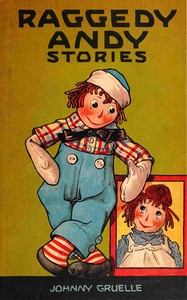
Reading Moral Tales, I lingered on that quiet moment where a mother’s gentle rebuke melts a child’s stubbornness—no lecture, just time. It reminded me of the patient kindness in old rag dolls, especially the way their adventures unfold without ever raising their voices. Those Raggedy Andy stories — A Reader’s Guide hold the same unhurried warmth, like sunlight on a windowsill, teaching through softness alone.
Save your reaction, strongest insight, and memorable passage.