About 39 minutes
Adventure of a Kite — Reading Companion
Fairy Moral Tales
8,920 recorded words. 4 minutes difference from this book's estimate.
View Gutenberg source #18968
The source record for The Tale of Mr. Tod — A Reader’s Guide measures this digital text at 8,044 words, 35 min estimated reading time, and 2 detected text sections.
The text analysis averages about 16.0 words per sentence, while the detected sections provide another way to judge how the source is divided.
Project Gutenberg metadata also associates the work with “Animals -- Juvenile fiction,” connecting these edition facts with the source record’s subject description.
Explore this collection
These alternatives are selected using recorded categories and estimated reading time.
About 39 minutes
Fairy Moral Tales
8,920 recorded words. 4 minutes difference from this book's estimate.
View Gutenberg source #18968About 26 minutes
Fairy Moral Tales
5,776 recorded words. 9 minutes difference from this book's estimate.
View Gutenberg source #15575About 80 minutes
Fairy Moral Tales
18,375 recorded words. 45 minutes difference from this book's estimate.
View Gutenberg source #17371Search stored excerpts and compare books → Choose by your preferences →
Choices use stored catalog measurements. Estimates vary with reading speed. A shared category is a catalog label, not a claim that two books have the same argument or literary quality.
Search reads excerpt text stored with this catalog and links to its associated Gutenberg record. The connection is stored in the site database; this tool does not recheck that every excerpt is word-for-word identical to that external record. Excerpt search does not cover every chapter and does not verify historical publication dates.
Catalog snapshot checked: 2026-09-25. Coverage: 100 public books, 100 available source excerpts.
Read the complete public-domain text at its original source.
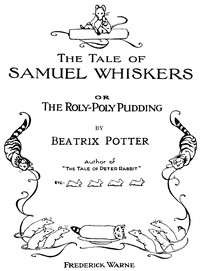
Read on Project GutenbergBeatrix Potter opens The Tale of Mr. Tod with a direct address to her readers: “I have made many books about well-behaved people. Now, for a change, I am going to make a story about two disagreeable people.” This framing immediately signals a departure from her usual polite animal society. The first paragraphs establish Mr. Tod as a wandering fox with “half a dozen houses” and Tommy Brock as a “short bristly fat waddling person” who sleeps in his boots and occupies Tod’s beds without permission. The rabbits—old Mr. Bouncer, Benjamin, Flopsy, and their babies—are introduced as secondary figures, caught between the two predators. The opening sets a tone of wry menace, where domestic details (a muffler, a pipe of rabbit tobacco) coexist with casual threats of eating “very little young ones.”
The narrative repeatedly draws attention to dwellings as contested spaces. Mr. Tod moves between a stick-house, a pollard willow, and an earth under Oatmeal Crag, but his homes are never secure. Tommy Brock invades them “without asking leave,” and the rabbits’ burrow is similarly vulnerable: old Mr. Bouncer forgets the babies in a shallow separate hole. The climax hinges on Tod’s attempt to reclaim his own house from Brock, leading to a chaotic battle that destroys furniture, crockery, and even the clock. Potter uses the houses to mirror the characters’ instability—no one truly belongs anywhere, and ownership is temporary.
Potter’s depiction of violence is deliberately exaggerated and absurd. Mr. Tod plans to drop a pail of water on Brock, but Brock substitutes a bundle; the pail crashes, and Tod believes he has killed his enemy. The subsequent fight is described with deadpan specificity: “the crockery was smashed to atoms,” “handfuls of Mr. Tod’s sandy whiskers” fly, and boiling water falls on Tod’s tail. The rabbits listen from below, fearing the floor will give way. This slapstick, combined with the characters’ unflappable self-regard (Tod’s monologue about disinfecting the bed), undercuts any real threat. The tone remains comic rather than grim, even as the baby rabbits remain trapped in the oven.
Old Mr. Bouncer, Benjamin, and Flopsy are largely passive figures. They do not drive the plot; instead, they react to the predators’ actions. In the opening, Mr. Bouncer sits in the sun chatting with Brock, forgetting his grandchildren. Later, the younger rabbits dig a tunnel into Tod’s house to rescue the babies, but their efforts are overshadowed by the fox-badger confrontation. Potter gives them little dialogue or agency—they “crept out of their tunnel, and hung about amongst the rocks and bushes, listening anxiously.” This positioning makes them sympathetic victims but also comic foils, highlighting the self-absorption of Tod and Brock.
Both Tod and Brock repeatedly misread situations. Tod believes the wet bundle is Brock’s corpse; Brock pretends to be asleep. The narrative voice often withholds information, letting the reader share the characters’ mistaken assumptions. When Tod peeps in the window and sees “a wet flattened something,” the text notes that “its head was covered by the wet blanket and it was not snoring any longer”—but does not reveal the trick until Brock appears in the kitchen. This pattern of deception extends to the rabbits: old Mr. Bouncer’s forgetfulness is a kind of misreading of his own responsibilities. The story rewards attentive reading, as clues (the bundle’s stillness, Brock’s earlier grin) hint at the outcome.
Potter’s prose is economical and rhythmic, with short declarative sentences and repeated structures. She uses lists to comic effect: “He ate wasp nests and frogs and worms; and he waddled about by moonlight, digging things up.” The dialogue is sparse but characterful—Brock’s joke about eating his own tail “tickled old Mr. Bouncer.” The battle scene accelerates into a series of clipped clauses: “The chairs were broken, and the window, and the clock fell with a crash.” This brisk pacing keeps the story moving even during descriptive passages, and the controlled syntax contrasts with the chaos of the events.
The excerpts end before the rabbits’ fate is resolved, leaving the baby rabbits still shut in the oven and the fight ongoing. Readers should note that Potter’s title character, Mr. Tod, is not the hero but one of two equally unpleasant antagonists. The story rewards attention to small details—the spud, the mole traps, the jars of jam—that accumulate into a vivid, unsentimental world. Approach the tale as a farce of property and pride, where the rabbits’ quiet persistence may or may not outlast the predators’ noise.
The rain drummed on the window while I finished The Tale of Mr. Tod, noting how Potter’s vinegar wit spared no one—not even the rabbits. That sharp, unsentimental edge lingered. Later, drying my glasses, I picked up another slim volume from the pile, and found myself shelved beside a different, softer kind of childhood: Little Saint Elizabeth and Other Stories — Reading Notes, whose grace felt like the calm after a storm.
Save your reaction, strongest insight, and memorable passage.